
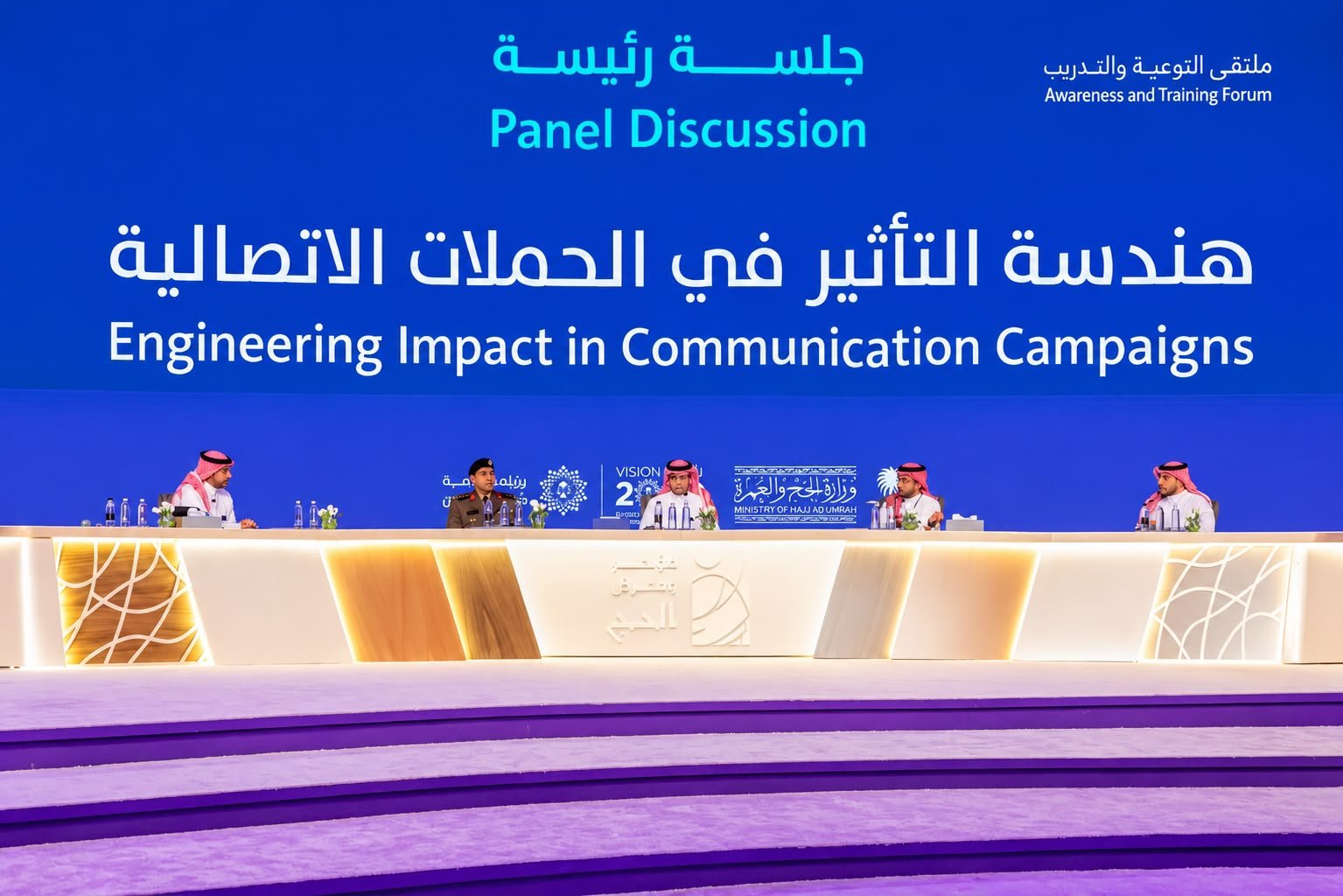
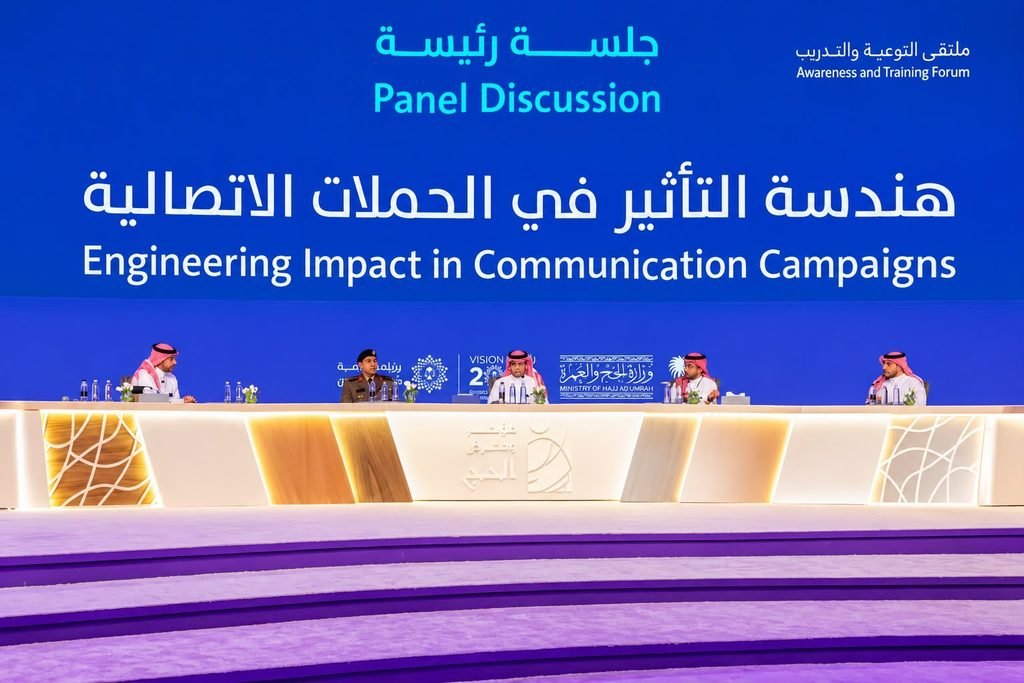
The sixth Hajj Conference and Exhibition in Jeddah featured a session titled “Engineering Influence in Communication Campaigns”, exploring how coordinated communication and public awareness campaigns can support pilgrims and improve their overall experience.
Held under the “Empowerment and Integration” track, the session brought together representatives from the Ministry of Hajj and Umrah, the Ministry of Media and the Pilgrim Experience Program to discuss the importance of unified messaging throughout the pilgrimage journey.
Coordination Across Government Entities
Eng. Anas bin Nasser Al-Humaid, Assistant Deputy Minister for Communication and Awareness at the Ministry of Hajj and Umrah, said integration among government entities has become part of daily operations since the launch of Saudi Vision 2030.
He explained that the entities share a common goal of serving pilgrims, with continuous communication and a proactive approach helping identify partners’ needs and support joint initiatives and campaigns.
Al-Humaid highlighted the “Coming for Umrah” (Jay lil-Umrah) campaign as an example of coordinated awareness efforts. Its messages reach Umrah performers through visa centres in 72 countries, as well as transport networks, airports and hotels. This ensures that guidance is available at different stages of their journey.
He added that the main objective of any communication campaign is to deliver a clear message to the intended audience, regardless of which organisation leads the campaign.
Understanding the Pilgrim Journey
Saleh bin Mohammed Al-Thubaiti, CEO of the Unified Media Operations Center for Hajj at the Ministry of Media, said understanding the pilgrim’s journey, including their needs and the different stages they experience, is essential to developing effective media messages.
He noted that these messages help coordinate security, organisational and health-related efforts, making it easier for pilgrims to perform their rituals.
The experience accumulated by government entities in serving pilgrims also helps them understand the details of the journey and develop messages suited to each stage.
A Unified Message Across Organisations
Eng. Khalid bin Mithqal Al-Shammari, General Manager of Strategic Communication and Media for the Pilgrim Experience Program, highlighted how Saudi Vision 2030 has strengthened coordination and alignment among organisations serving pilgrims.
He explained that communication messages follow two approaches. The vertical approach connects them to the core message of the Vision, while the horizontal approach ensures consistency across the different organisations involved in pilgrim services.
Given the diversity of nationalities and audiences, Al-Shammari stressed the importance of maintaining a central message to avoid conflicting communications. At the same time, individual organisations can adapt their content creatively to suit specific audiences while retaining a consistent core message.
He cited the “No Hajj Without a Permit” campaign as an example of this approach, with the Ministry of Interior, the Ministry of Hajj and Umrah and other relevant entities working together to communicate a unified message.
He also highlighted the “Hayyakum Allah” identity, which represents the hospitality and warm welcome extended to pilgrims.