

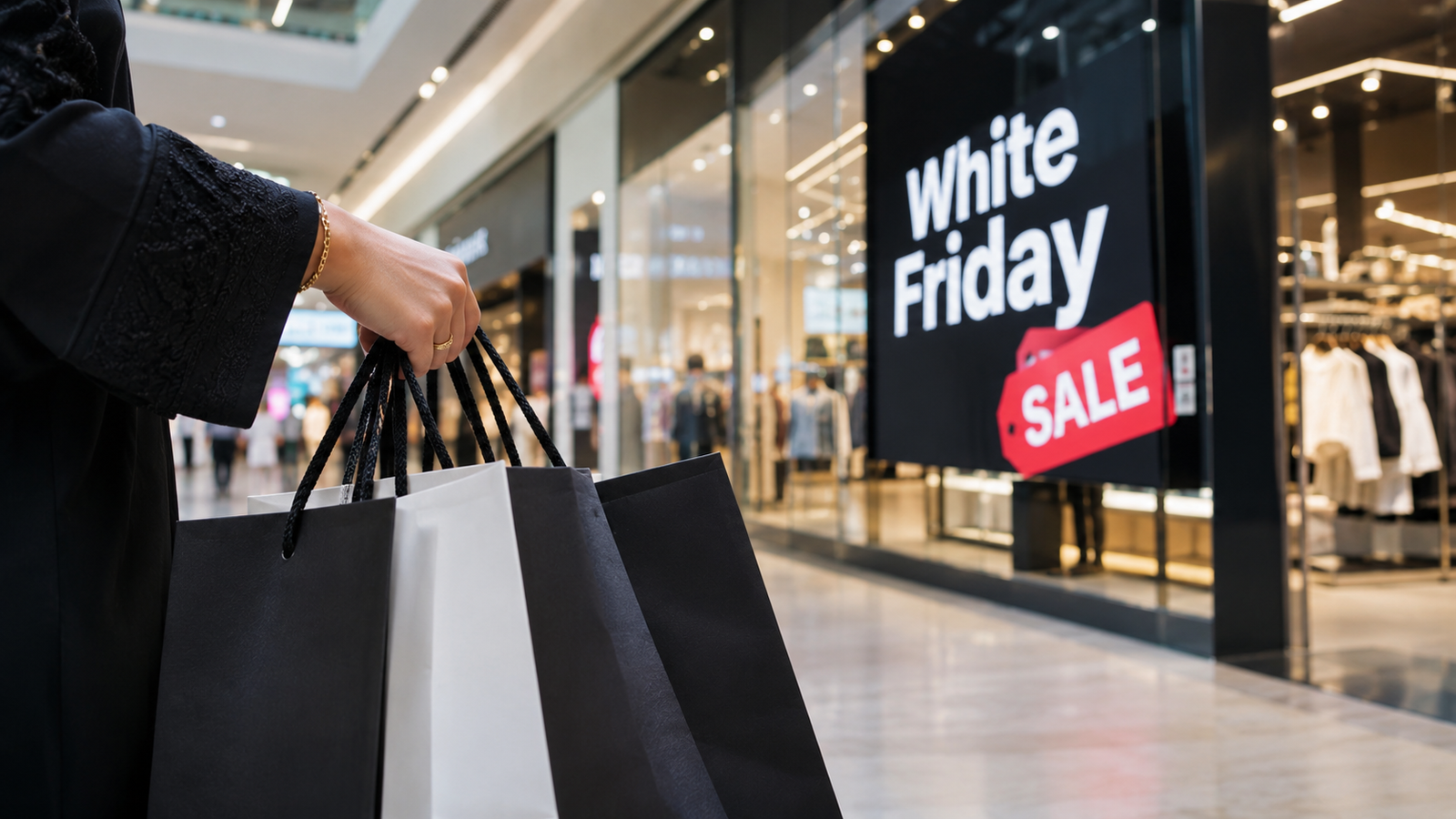
As White Friday 2026 approaches, retailers in the UAE are facing the challenge of delivering attractive promotions while protecting profit margins. According to Trevor Jordaan, Senior Director, Industry & Supply Chain Advisory at Blue Yonder, achieving this balance requires a clear understanding of consumer spending priorities, discount strategies and changing demand patterns.
Jordaan highlighted findings from a recent Deloitte study involving 1,000 consumers in the UAE and Saudi Arabia, which examined household finances and purchasing behaviour amid regional uncertainty. In the UAE, 39% of respondents reported cutting spending on clothing, while 37% said they had reduced spending on non-essential consumer electronics. In Saudi Arabia, 40% reported increased household spending on clothing, while 39% said they were spending more on non-essential consumer electronics.

The findings highlight differences in consumer spending patterns across the two markets. Jordaan expects UAE shoppers to be more selective this White Friday, focusing on offers that deliver meaningful savings for their households. Saudi Arabia, meanwhile, could present stronger opportunities in discretionary spending categories. However, he noted that higher spending does not necessarily indicate increased purchasing volumes, as consumers may also be paying more for the same quantity of goods.
Matching Promotions to Demand and Delivery Costs
Jordaan cautioned that broad discounting can increase sales without necessarily delivering profitable growth. He advised retailers to tailor promotions according to local demand, carefully determining which products to discount, the depth of offers and where inventory should be positioned, while considering delivery capacity and fulfilment costs.
White Friday promotions can also encourage shoppers to bring forward purchases they had originally planned to make in the following weeks. Distinguishing these purchases from genuine demand growth can help retailers avoid excess inventory and unnecessary markdowns once the promotional period ends.
He added that retailers should continuously monitor sales performance, inventory levels, warehouse capacity and delivery operations throughout the campaign to adjust their strategies as demand evolves.
How AI Can Help Retailers Track Demand
Jordaan also highlighted the role of artificial intelligence in helping retailers identify shifts in demand earlier. By bringing together data on promotional performance, inventory availability and order fulfilment, AI can help businesses respond more effectively to changing market conditions.
He cited a global PwC survey of 351 CEOs conducted in August 2026, in which 38% said their companies use AI to identify and act on opportunities arising from changing market conditions, including shifts in customer demand.
Jordaan emphasised that retailers should evaluate White Friday performance beyond sales volumes. Profitability, fulfilment efficiency, delivery reliability and preparedness for the weeks following the campaign are equally important indicators of a successful promotional period.