

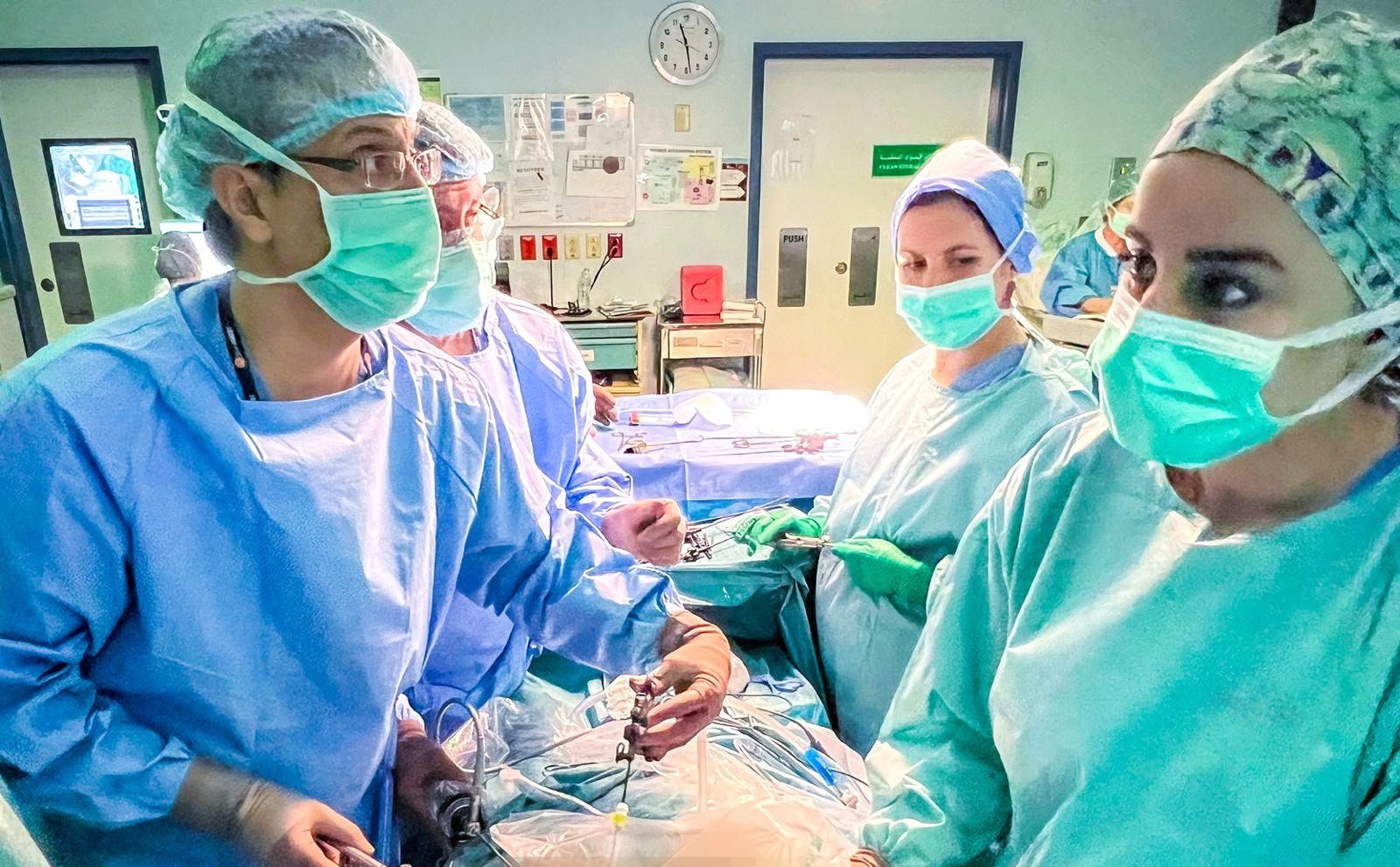
King Faisal Specialist Hospital & Research Centre (KFSH) recorded a 41% increase in fetal diagnostic and treatment procedures over two years, rising from 1,460 in 2023 to 2,055 in 2025.
The procedures are carried out through the hospital’s Fetal Diagnosis and Therapy Program, established nearly two decades ago. The programme combines early detection of fetal disorders and congenital abnormalities with clinical assessment, treatment planning and, when necessary, medical intervention inside the womb. This allows certain conditions to be addressed before complications become more serious.
KFSH performed its first laser procedure to treat twin-to-twin transfusion syndrome in early 2008. The condition occurs when blood flow between twins sharing a placenta becomes uneven. Since then, the programme has expanded to include intrauterine blood transfusions for fetuses with anaemia, treatment of rare blood-flow disorders and interventions for selected congenital abnormalities.
In 2024, the hospital performed the first procedure of its kind in the Middle East to repair a spinal cord birth defect in a fetus at 26 weeks of pregnancy. The operation used fetoscopic surgery, with small incisions made in the uterus. The baby was subsequently born at 36 weeks in good health. The procedure involved specialists from maternal-fetal medicine, paediatric surgery, neurosurgery and neonatology.
KFSH has also received international recognition for its healthcare services. In 2026, it was ranked first in the Middle East and Africa and 12th globally among the world’s top 250 academic medical centres. According to Brand Finance, its brand was also recognised as the most valuable healthcare brand in Saudi Arabia and the Middle East for 2026.
The hospital was additionally included in Newsweek’s World’s Best Hospitals list for 2026, as well as its World’s Best Smart Hospitals and World’s Best Specialized Hospitals rankings for 2027.