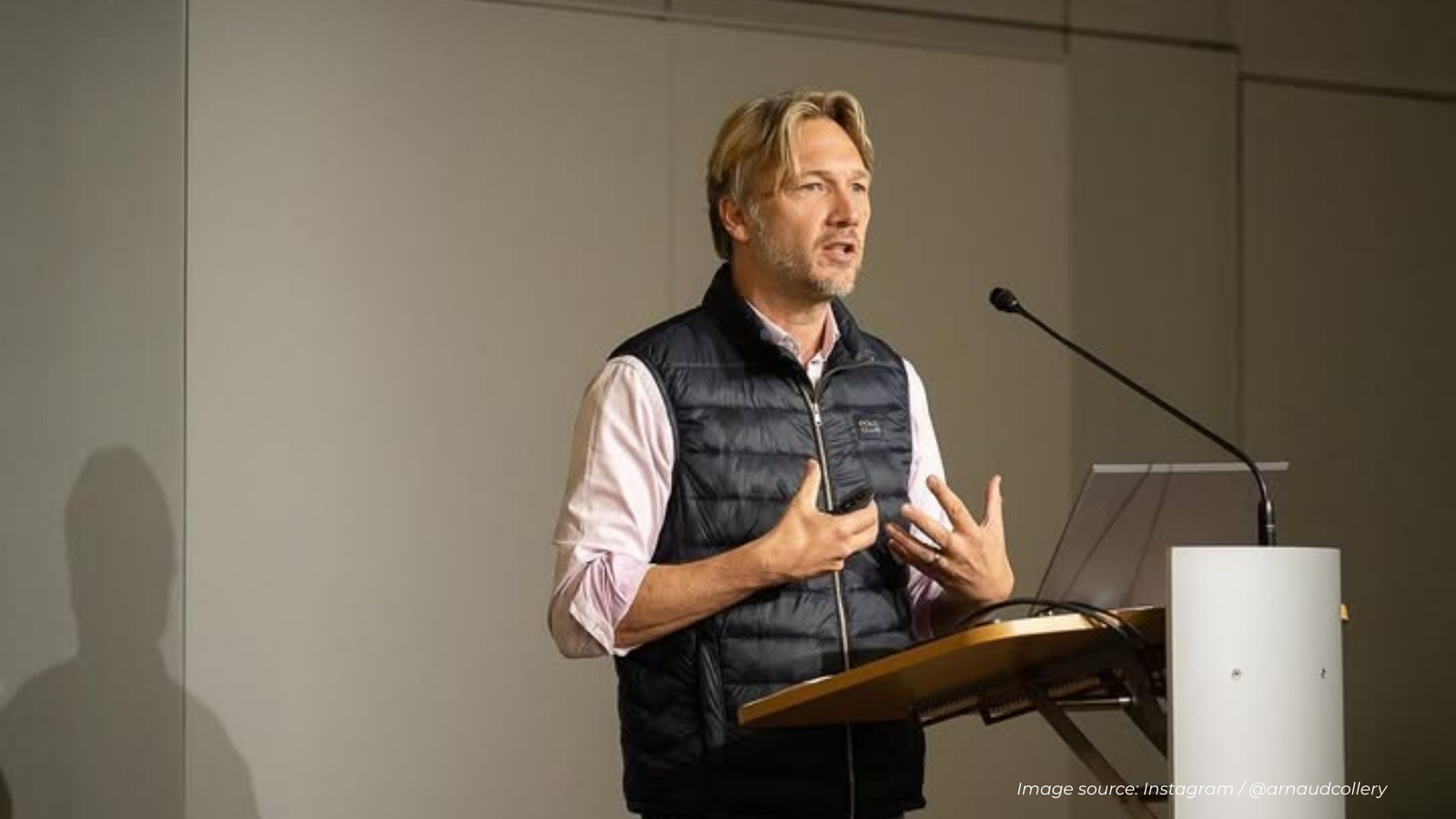

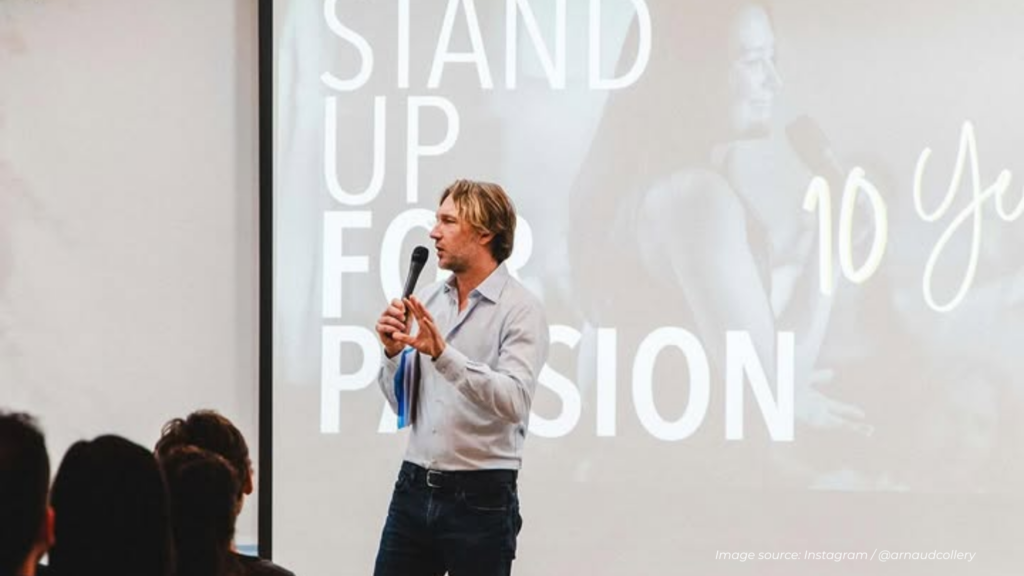
In conversation with Arnaud Collery, co-founder and CEO of Humanava, global leadership coach, speaker and author, on modern leadership, emotional intelligence, and building work cultures people genuinely want to be part of.
1. How do you personally define modern leadership in a world that is emotionally exhausted yet performance-driven?
I think modern leadership today starts with a bit of honesty about where we’re coming from. For decades (and perhaps centuries), leadership has been defined by growth, performance, and expansion. That made sense in a time when growth was seen as the primary way to ensure stability and progress. But we rarely stopped to ask where that growth was actually taking us, or what it was costing to people, to society, or to the environment.
Today, we’re living with those consequences. Burnout, disengagement, environmental pressure. These are not side effects, they’re signals. And younger generations are reacting to that. They’re less interested in performance for performance’s sake and more interested in the kind of life and future they’re contributing to.
So modern leadership is no longer just about driving growth. It’s about looking with a longer lens and asking: What kind of environment are we creating? What kind of humans are we shaping through the way we work? Performance still matters but it has to be performance that can last, and that leads somewhere worth going.
At the end of the day, most of us don’t just want to prosper individually. We want to live and work in environments that are healthy, supportive, and worth committing to over time. Leadership today is about taking responsibility for that through the conscious choices we make about how we grow.
2. Having worked across cultures and continents, what leadership traits matter most in multicultural societies like Saudi Arabia?
What matters most, in my experience, is the ability to create trust. When people come from different backgrounds, leadership doesn’t start with models or cultural labels: it starts with how safe people feel with you. Before anything else, people want to feel respected, treated fairly, and able to contribute. Saudi Arabia is transforming quickly, but it’s also a society grounded in strong values and history.
Leadership works best when it respects that foundation and focuses on what people share, rather than overemphasizing differences. Of course, differences exist and they matter, but when trust is strong, they become manageable. The leaders who succeed are those who know when to give clear direction and when to listen, when to move fast and when to slow down. In multicultural teams, authority alone is not enough.
People follow leaders who are grounded, consistent, and genuinely interested in them as human beings especially in times of rapid change.
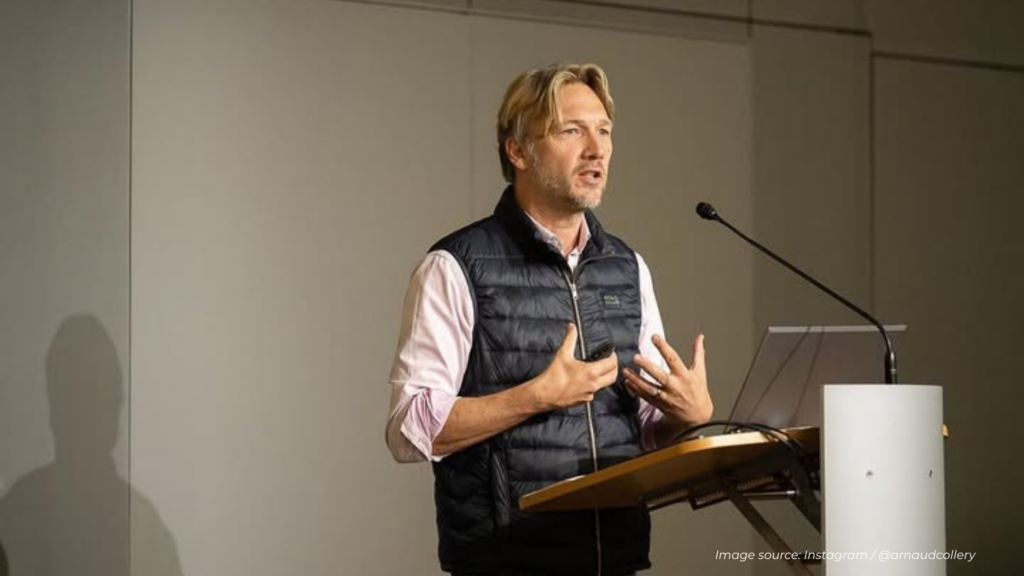
3. Humanava focuses on purpose and emotional intelligence—how do you convince traditional organizations that these are business imperatives, not soft ideas?
I don’t usually try to convince people with theory. I’ve worked with too many organizations to know that these things show up whether we talk about them or not. The moment humans are working together, emotions, energy, and relationships are already shaping what gets done. When people feel respected, when there’s trust, when they understand why their work matters, things move faster. Decisions are clearer. Conversations are more honest. When those things are missing, everything becomes heavier even in very high-performing environments.
Some companies still see this as “soft” because the impact is not always immediate. But over time, you see it clearly. People disengage, collaboration breaks down, and performance starts to fade. You don’t lose results overnight,you lose them slowly. If everything were done with AI, maybe this wouldn’t matter. But as long as humans are doing the work, especially in complex and fast-moving contexts, purpose and emotional intelligence are not extras. They’re part of what makes performance possible in the first place.
4. In fast-growing economies, ambition often outpaces self-awareness. How should leaders balance growth with humanity?
I don’t think growth or ambition are the ultimate problem. They have helped societies progress and increase standards of living. The issue appears when growth becomes the goal in itself, without enough thought about where it’s taking us or what it’s costing along the way.
Leadership starts when ambition is no longer just about personal success or short-term results, but about responsibility, for people, for the environments we create at work, and for the kind of future we’re building. That’s how leaders balance growth with humanity. Without reflection, we risk repeating the same patterns, pushing for more, faster, until something breaks.
Self-awareness allows leaders to step back and ask better questions: Is this pace sustainable? Is this growth creating something healthier, or just bigger? We all want to live and work in environments that stay healthy over time, places with healthy conditions and a sense that progress is actually improving life. If leaders don’t hold that longer view, it’s hard to see who will.
5. Your career spans finance, entertainment, and entrepreneurship. What did these transitions teach you about reinvention?
For me, reinvention was never about choosing the safest or most logical option. It came from a desire to explore the world, and to understand myself within it. Security matters, of course, but losing it puts you on the line. You’re forced to go deeper, into your fears, your doubts, and what really drives you. I knew each move would be difficult, but that was part of the attraction.
Difficulty accelerates learning. You discover strengths you didn’t know you had, and you start trusting yourself in ways you never imagined. And you never really start from zero. You carry your skills and experiences with you, they just show up differently. One thing I learned is that reinvention doesn’t happen in isolation. You surround yourself with people and an ecosystem that support you, challenge you, and help you grow faster.
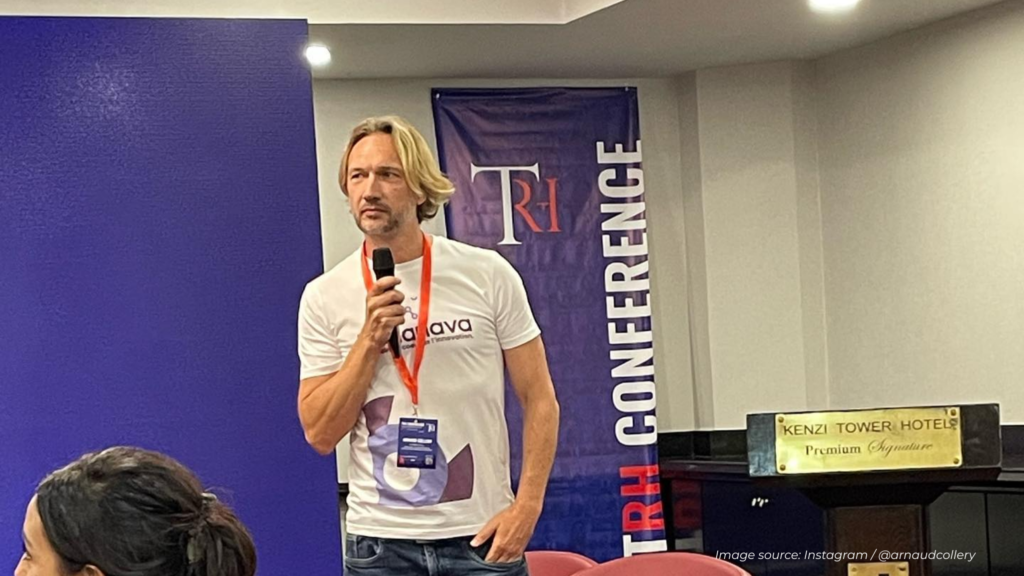
6. Storytelling is central to your work—why is narrative such a powerful leadership tool today?
Because people don’t experience work as a list of tasks. They experience it as something they are part of. Whether you work in an office, a shop, or a restaurant, you’re constantly asking yourself what kind of place this is, what matters here, and whether your effort makes a difference. Storytelling helps answer those questions.
When there’s no clear story, work becomes mechanical. People do what they are told, but they disconnect. When there is a story, even simple work takes on a different meaning. A shop isn’t just selling products; it’s a part of the community. A restaurant isn’t just serving food; it’s creating special moments, a celebration. Nothing about the job necessarily changes but how people show up does. For me, storytelling is also about inspiration.
It’s about giving meaning to everyday work, helping people feel proud of what they’re contributing to. When people understand the story they are part of, they don’t need to be pushed. They engage because it makes sense.
7. As AI and automation reshape work, which human skills will become non-negotiable for leaders?
I don’t think we suddenly need new human skills. We’re still human. AI is changing our tools. It’s giving us more speed, more data, more automation. But it doesn’t replace experience, relationships, or responsibility. We’re still the ones living with the consequences of the decisions we make.
What I do see is a bit of confusion between what AI can handle and what humans still have toown. AI can process information and optimize systems, but it doesn’t experience the world. Humans do. We carry judgment, values, doubt, and responsibility and that becomes even more important when the tools in our hands are this powerful. So it’s not about developing new human skills. It’s about using the ones we already have with more intention.
The real question for leaders is not how fast we can build or deploy AI, but where it is leading us. What kind of work are we creating? What kind of relationships are we preserving? What kind of future are we shaping with these tools? AI can help us do more, faster. Leadership is about deciding why, how, and to what end. That responsibility can’t be automated.
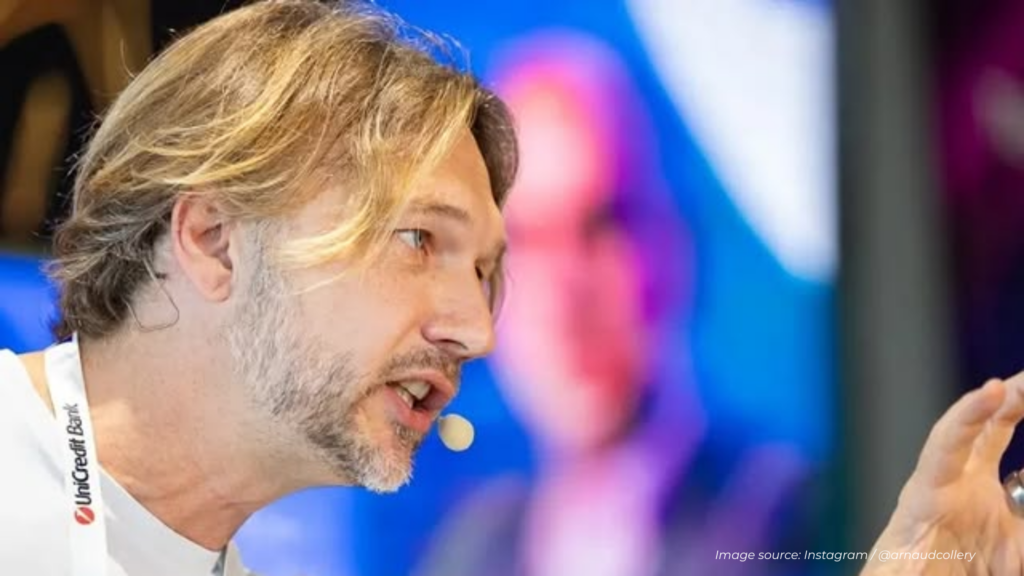
8. What does meaningful success look like to you today, compared to the early stages of your career?
Early in my life, success was really about exploration. I felt a strong desire to discover the world, different cultures, environments, and ways of thinking and living, and to understand myself through direct experience. I wasn’t following a linear path or chasing a clear definition of success. I was traveling, trying things, meeting people, and learning by immersion.
That desire for discovery hasn’t disappeared. What’s changed is how it is expressed. Today, meaningful success is about staying creative, staying curious about people and their life paths, and continuing to explore. And it is the feeling that what I’ve lived and experienced is being put to use in a way that genuinely serves others.
It’s helping people work better together, helping individuals shift perspective, and creating moments where something really opens or transforms. It’s building something that feels alive and aligned.
9. How can companies move beyond well-being slogans and create cultures people genuinely want to be part of?
The problem isn’t intention. It’s coherence. When well-being is talked about, but leadership behavior and culture don’t support it, people immediately feel the gap. Then it becomes just words. Well-being is never created by policies alone. It’s created by leadership. By how people are treated day to day, how trust is built, how pressure is handled, and whether people feel respected and taken seriously. In a place like Saudi Arabia, this has to be aligned with local values and cultural realities.
But underneath that, the needs are very human and very universal. People want to feel good at work. They want to feel respected. They want to understand what they’re contributing to and why it matters.
They want to feel they’re growing, not just executing tasks mechanically. That’s where storytelling becomes important, not as communication, but as meaning. What kind of place is this? What are we building together? What does good work look like here? When leaders take responsibility for creating trust, clarity, and direction, well-being stops being a separate topic. It becomes the result of a culture where people feel alive, engaged, and part of something that makes sense.
At the end of the day, organizations don’t create well-being, leaders do, by remembering that humans are not machines. We’re living, thinking, feeling beings, and culture has to reflect that reality.
10. If you were advising young leaders in the Middle East today, what mindset shift would you insist on first?
I would start by saying that leadership is a privilege. It’s not just a position or an opportunity for personal success. It’s being entrusted with responsibility for more than yourself. The moment you lead, your decisions start shaping other people’s lives, energy, and futures. That matters. If someone only wants to think about their own ambition or trajectory, that’s fine. But then leadership may not be the right place. Leadership begins when you accept responsibility for people, for the environment you create, and for the consequences of your choices.
For young leaders today, especially in a region going through such rapid transformation, the challenge is to combine ambition with responsibility. Not to rush into power, but to grow into it with intention. Leadership isn’t about moving fast for its own sake. It’s about direction, judgment, and care for what you’re building and who you’re building it with. If that mindset is there, leadership becomes something meaningful. Not just for the leader, but for everyone involved.