

Sumanta Roy on Formula E, innovation and the Middle East
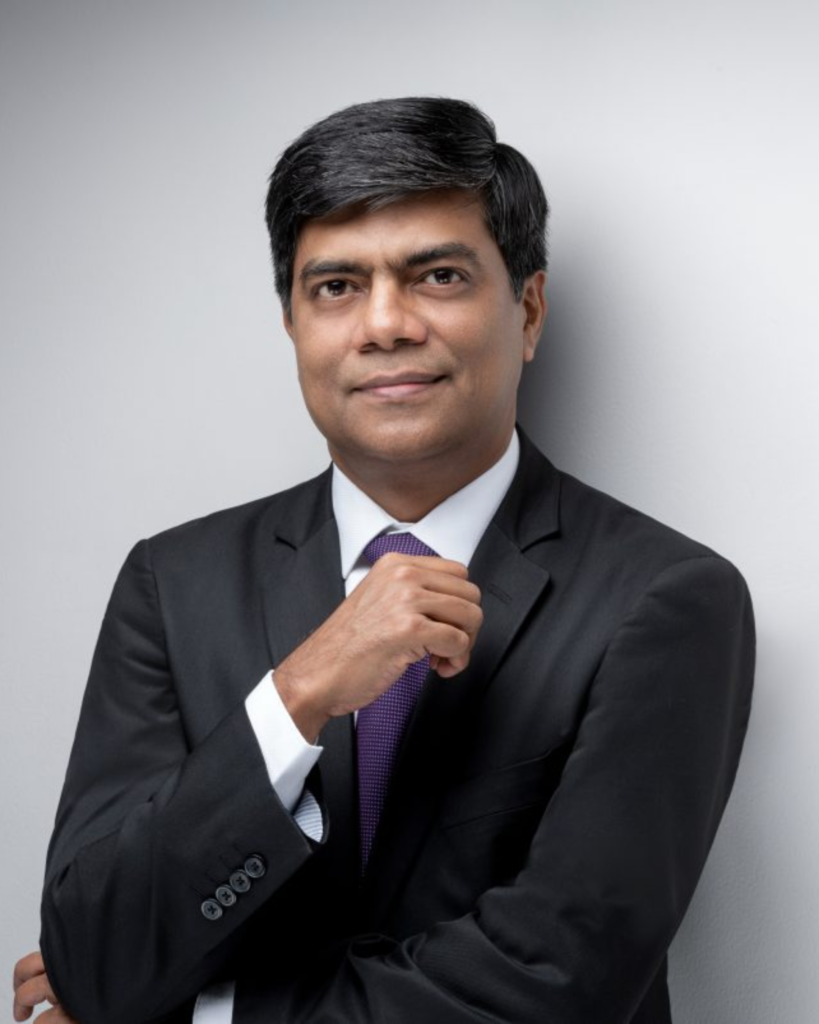
During our time at the Jeddah E-Prix, we had the opportunity to interact with Sumanta Roy, President and Regional CEO for Middle East, Africa and Mediterranean at Tata Consultancy Services. The conversation offered a closer look at how TCS views Formula E, the region, and the role of technology beyond the track.
Roy began by putting the scale of the business into perspective. TCS today operates at around 30 billion dollars globally, with the Middle East and Africa contributing roughly 700 to 800 million dollars. While that is a relatively small share, he pointed out that the region is growing faster than most others, outside of India. This makes it an important market, not just in terms of size, but in terms of future potential.
What makes the region particularly interesting is its diversity. In markets like the UAE and Saudi Arabia, digital adoption has moved quickly, especially in sectors like banking. At the same time, other parts of Africa continue to rely on older systems. This creates a mix of environments within a single region, each requiring a different approach.
There are also clear differences in how business is done. In the Gulf, relationships play a major role. Entering the market may take time, but once partnerships are established, they tend to be long-term. In contrast, other regions operate in a more contract-driven manner. For TCS, this mix is not a challenge, but an advantage. It allows the company to work across different models within the same geography.
Roy also highlighted how the region is moving forward in areas like artificial intelligence and sustainability. Despite being traditionally associated with oil, there is a strong push towards new technologies and more sustainable systems. This shift is creating opportunities for companies working at the intersection of technology and transformation.
The conversation naturally moved to Formula E and its role in this larger picture.
While Formula One and Formula E may appear similar, Roy described them as fundamentally different in how they operate. Formula One is built around maximising resources, while Formula E is designed around constraints. Energy usage is limited, tyre usage is restricted, and every decision must be carefully managed.
This constraint-driven approach, he explained, makes Formula E more relevant to real-world mobility. The conditions under which teams operate are closer to what can be applied to road vehicles. It also explains why more teams are expected to enter the championship in the coming years, as manufacturers begin to see its value beyond racing.
Sustainability is another key aspect of this shift. While Formula E is electric, Roy pointed out that its impact goes further. Much of the development is driven by simulation, which reduces the need for physical testing and cuts down on material usage. This makes the entire process more efficient, not just the final product.
That same thinking is reflected in TCS’s work beyond the track. Initiatives like Sustainathon in Saudi Arabia bring students together to work on real sustainability challenges. Teams are guided over several weeks, combining ideas with technology support to build practical solutions. The goal is to create a stronger connection between innovation and real-world impact.
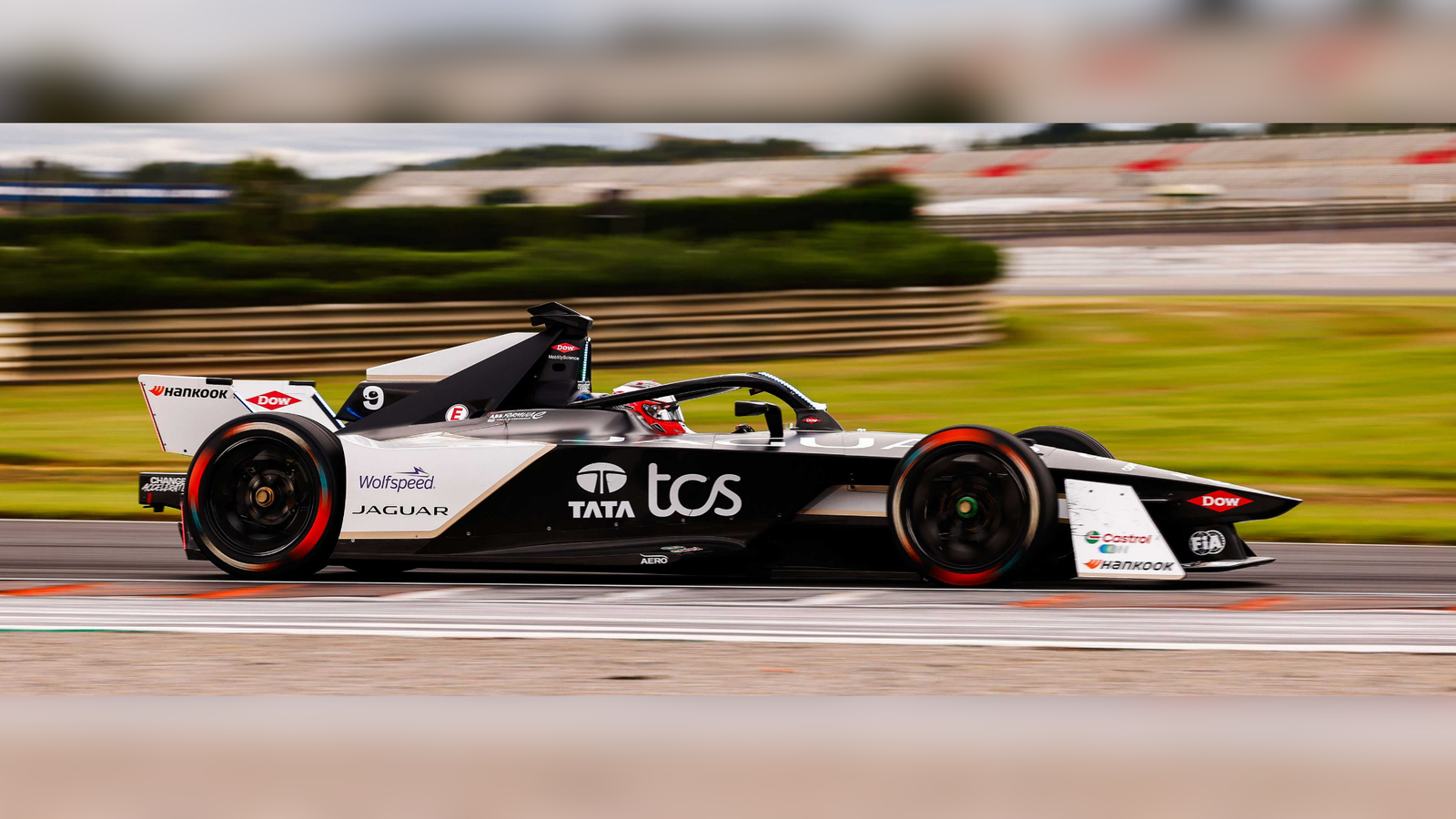
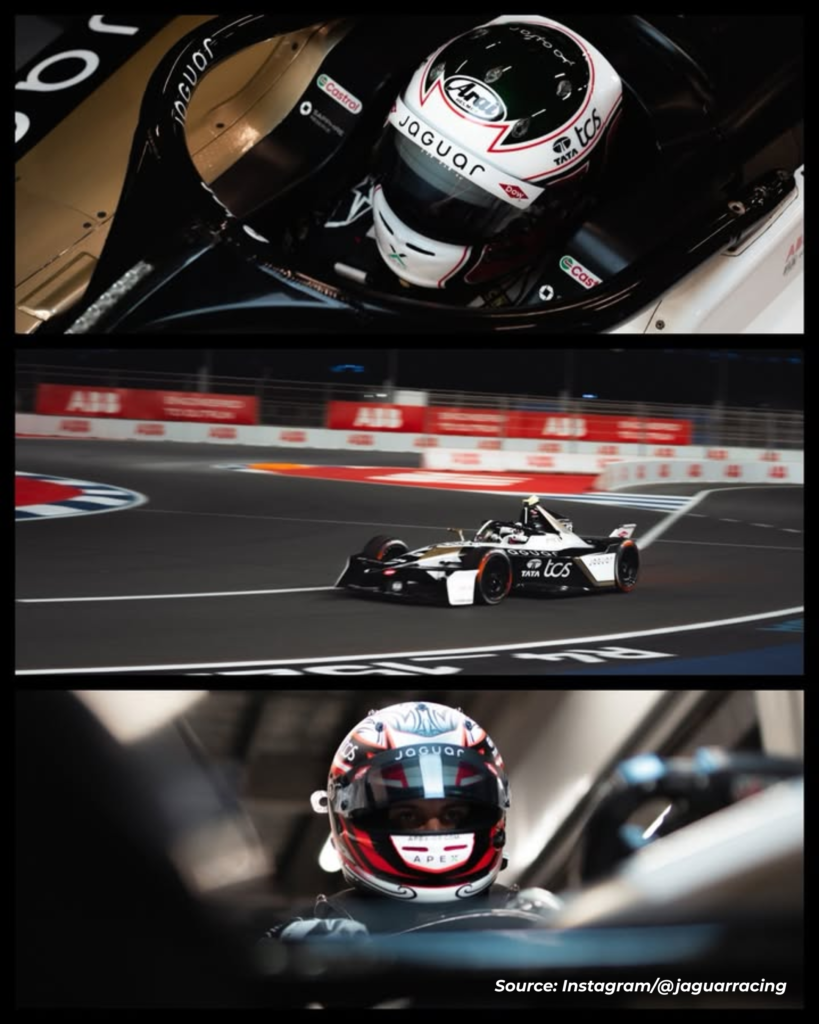
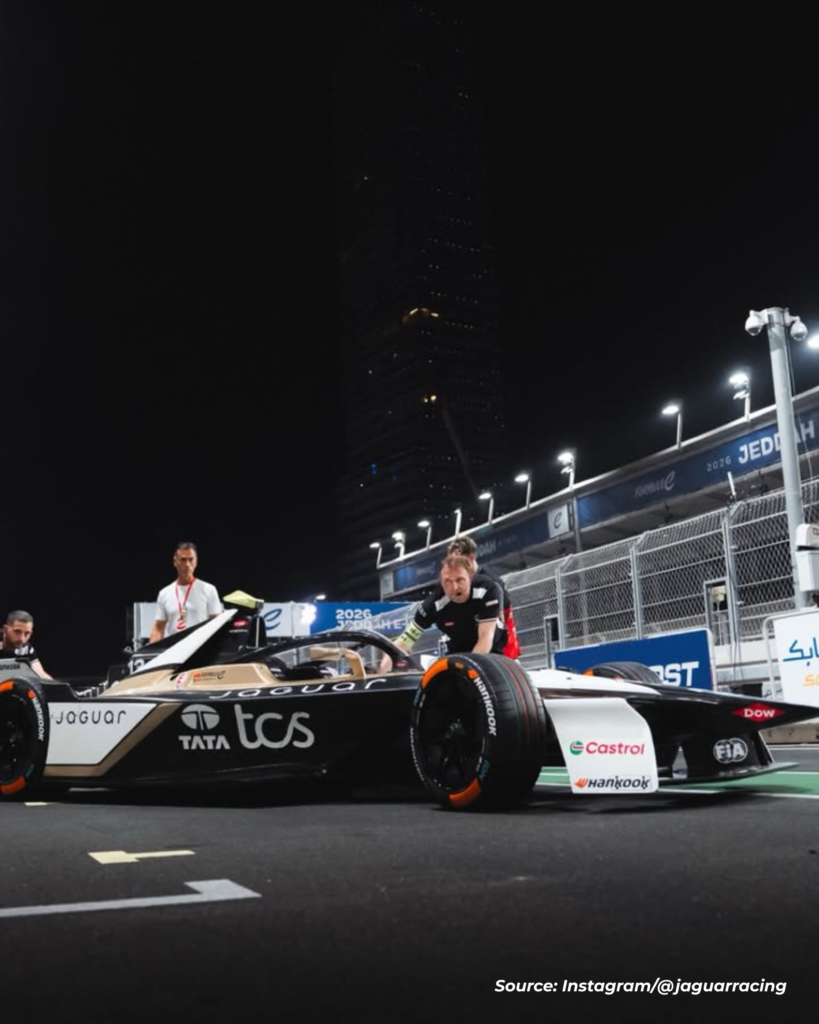
The partnership with Jaguar TCS Racing also plays a role in strengthening these capabilities. Roy described it as more than just a sponsorship. TCS is involved both as a technology partner and a brand partner, creating a deeper level of engagement. This allows the team to apply what it learns in racing to other areas such as digital twins, simulation, and computer vision.
These technologies are already being used in fields like autonomous driving. Instead of relying only on physical testing, scenarios can be recreated in virtual environments. A vehicle can be tested in different conditions, from extreme weather to unexpected obstacles, without leaving a controlled setup. The experience gained from motorsport helps improve these systems further.
At the same time, Roy made it clear that TCS continues to focus on enterprise-led work. Most of its services are delivered through businesses and governments, rather than directly to consumers. Even when solutions reach end users, they often do so through larger systems. This approach allows the company to operate at scale while supporting public and private sector needs.
When asked about the impact of its involvement in Formula E, Roy explained that the value cannot always be measured directly. It is not about a fixed return, but about a combination of brand, capability, and long-term learning. The partnership helps sharpen skills, strengthen expertise, and open up new possibilities across industries.
Looking ahead, he expects the Middle East and Africa region to continue growing in importance, potentially moving closer to three percent of TCS’s overall business. The combination of rapid development, technological ambition, and changing economic priorities makes it a region to watch.
The interaction offered a clearer understanding of how Formula E fits into a much larger picture. What happens on the track is only one part of the story. Behind it lies a system built on technology, partnerships, and constant learning, shaping what comes next both in mobility and beyond.