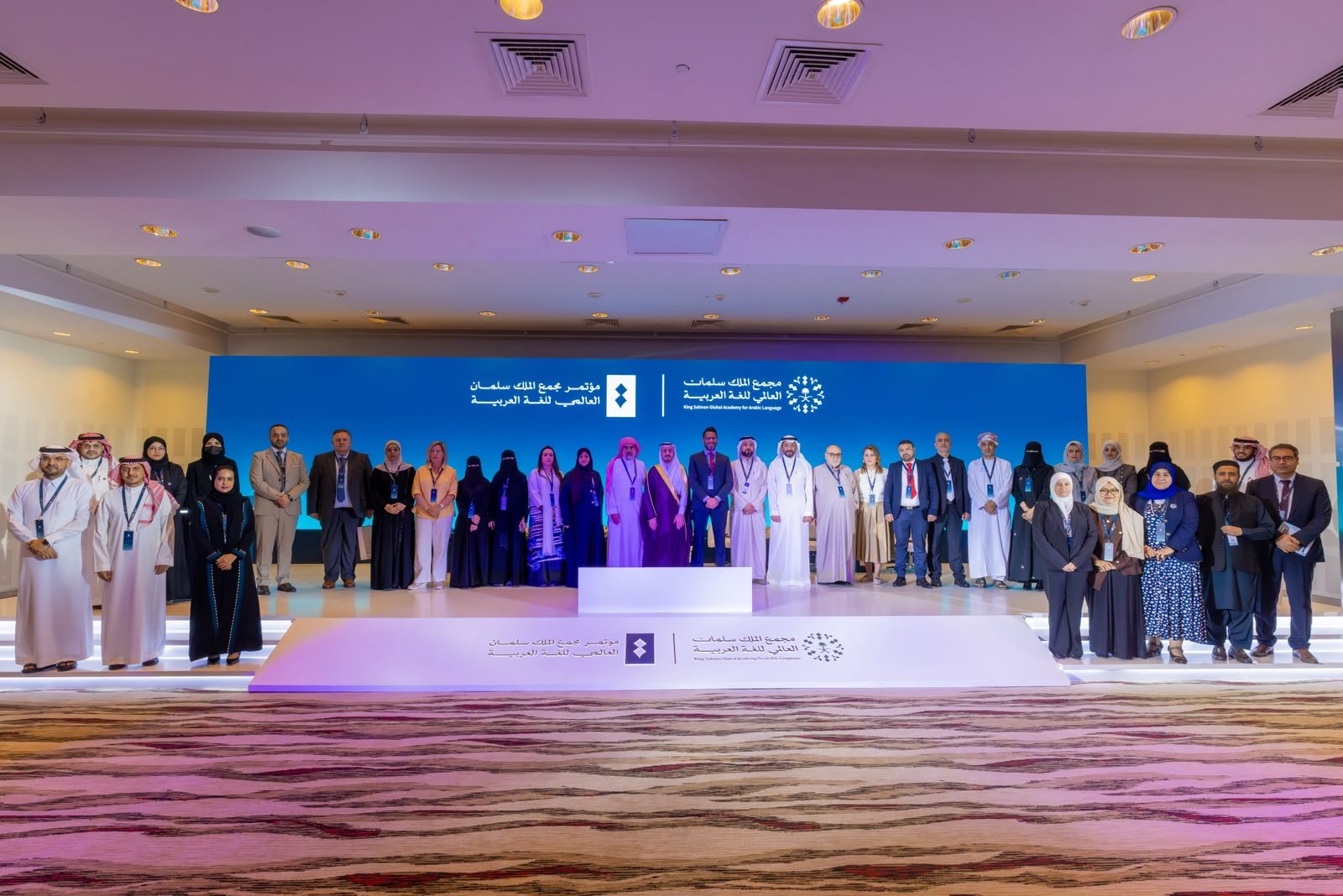

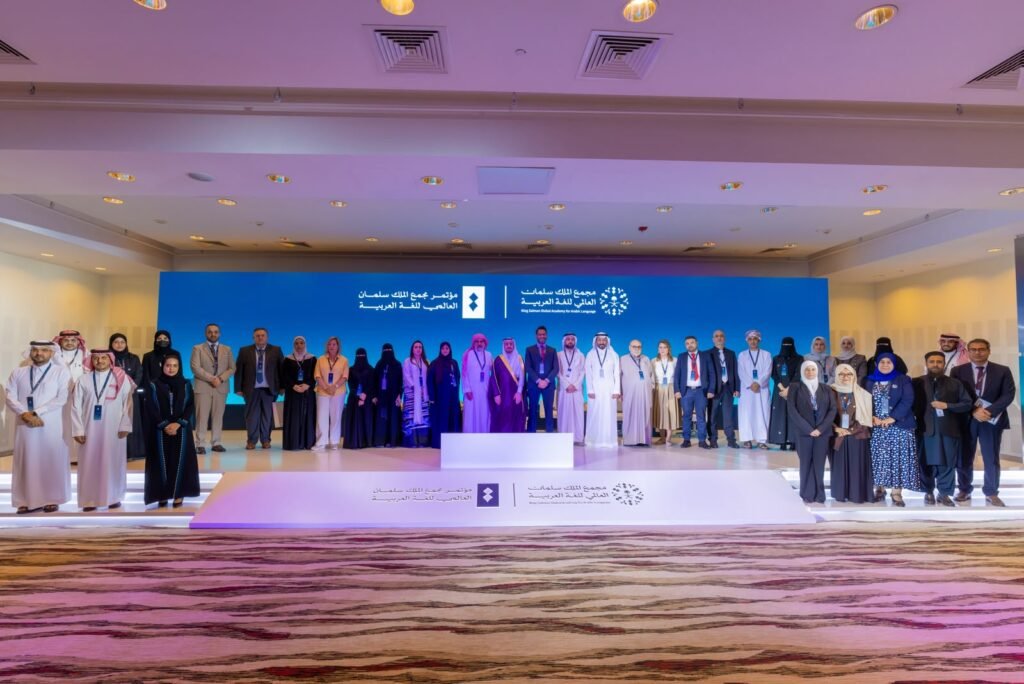
The King Salman Global Academy for Arabic Language has concluded its fifth annual international conference, titled “Arabic Language and Culture: Intersections and Dimensions,” in Riyadh, bringing together researchers and specialists in language and culture.
Held on October 4 and 5, the conference examined the relationship between Arabic and culture, with discussions covering identity, heritage, creativity, intercultural interaction, digital culture, and language and cultural policies.
The conference was organised as part of the Academy’s efforts to study Arabic within its scientific and cultural contexts and develop new research pathways examining the language’s relationship with identity, heritage, creativity and the changing ways culture is produced and shared.
Eight Recommendations
The conference concluded with eight recommendations focused on strengthening research, education, digital development and cultural cooperation around the Arabic language.
1. Continued support for Arabic
The conference issued a message of thanks and appreciation to the Minister of Culture and Chairman of the Academy’s Board of Trustees for his continued support for the Academy’s work and initiatives serving the Arabic language.
2. Strengthening the Academy’s role
Participants highlighted the Academy’s role in developing scientific and cultural pathways focused on Arabic and its presence in identity, creativity, intercultural interaction, digital culture and language and cultural policies.
3. Expanding linguistic research
The conference called for greater attention to linguistic studies examining the relationship between Arabic and cultural identity, as well as its role in heritage, collective memory, cultural and creative texts and discourse, and related questions of meaning, semantics and terminology.
4. Studying Arabic beyond the Arab world
Participants recommended expanding research into the presence of Arabic outside the Arab world, including its influence on languages, cultures, literature and international institutions, while highlighting its role in intercultural communication.
5. Developing cultural content in Arabic education
The conference called for stronger cultural content in Arabic language education programmes, particularly those designed for non-native speakers.
It also recommended greater attention to educational books, digital platforms and programmes that connect language proficiency with communicative competence.
6. Supporting research in digital culture and AI
Participants called for greater support for applied research in digital culture and artificial intelligence, including the representation of cultural identity and knowledge, Arabic content production, large language models and the monitoring of bias in digital and generative environments.
7. Connecting language planning with cultural policy
The conference recommended strengthening the integration between language planning and cultural policies, while supporting national legislation and strategies that protect the position of Arabic and expand its presence across cultural, knowledge-based and digital fields.
8. Expanding scientific cooperation
Participants called for continued dialogue and cooperation among language, cultural, educational and media institutions, researchers and policymakers.
The recommendation aims to encourage the exchange of expertise and the development of joint initiatives that support Arabic across different cultural contexts.
The final statement was prepared and overseen by a committee of researchers involved in organising the conference and participating in its sessions.
The fifth edition of the conference continues the Academy’s efforts to strengthen research and cooperation around the Arabic language while examining its evolving role across cultural, creative, educational and digital fields.