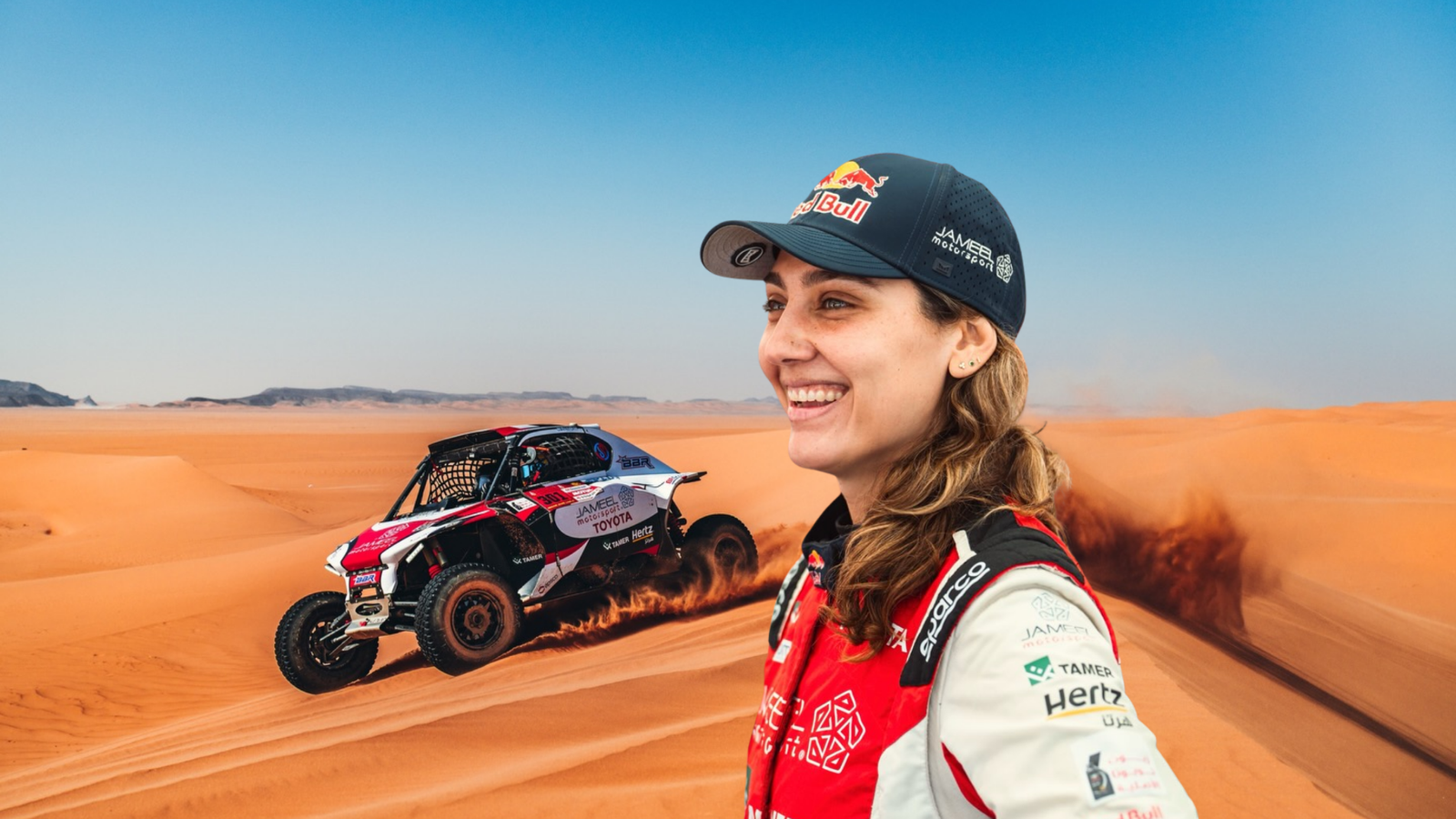
Q&A with Dania Akeel, the first Saudi woman to win an international rally title, an FIA Middle East Baja Cup champion, and a top-10 Dakar Rally finisher.
Your journey spans academia, motorsport, and entrepreneurship. How have your studies influenced your approach to racing and business?
It was actually crucial for me to use my business degree skills in motorsport, especially when it came to understanding costs, financing the season, selling sponsorships, and providing a return for my partners. A lot of this knowledge came from my master’s degree in international business, and it really allowed me to pursue my racing passion as a business. It helped a lot.
After facing a major racing accident early in your career, what mindset shift helped you move forward stronger?
It wasn’t major, actually. It was very simple. They call it a low slide on a corner, so I fell off the bike while sliding into the corner, and I wouldn’t say it was serious. It just happens; it’s part of motorsport. There’s always a risk of accidents like that, and from my mindset, it didn’t affect me. When you’re racing, you’re the one who chooses to race, and you’re the one who takes responsibility for the risks involved. It doesn’t change anything. This is a very real part of the sport, and it can happen to anybody, so it’s not surprising when it occurs.
As the first Saudi woman to compete internationally in motorcycle racing, what message do you hope to send to aspiring female athletes?
My message is simple. If someone has a passion for something and wants to excel at it, they need to work hard, stay focused, have the right approach, and work with professionals to develop in a safe and efficient way. I think it’s better to get help from people with experience and support rather than improvising.In motorsport, you will always benefit from proper training when it comes to developing your driving skills. I would really focus on developing those skills more than anything else.
How do you prepare mentally and physically for high-pressure competitions like the Dakar, FIA Middle East Baja Cup?
Physical endurance and strength are extremely important. They can make a huge difference in a race. The better your physical fitness is, the less stress you feel when you’re driving, the clearer your mind becomes, and the smoother your race is. That’s why having top-level physical fitness and strength is so important. When it comes to mental preparation, the most important thing is to focus on the target, block out everything else, and stay focused on that one goal.
What has been the most challenging moment on the track, and how did it shape your strategy going forward?
There’s no single most challenging moment, to be honest. There are many setbacks and difficult experiences that happen. For example, if the car stops working through no fault of your own, or if there are difficulties during the race. These things are very common in motorsport, and you just have to make the best of the situation you’re in and try to get the best result out of it. Sometimes you have to retire from a race, and that’s a difficult moment to accept. But then you focus on the next race and keep your target in mind. The idea is to keep going. The story is never finished with a failure or a setback because you are still writing it.
Which achievement are you most proud of, and why does it stand out among your milestones?
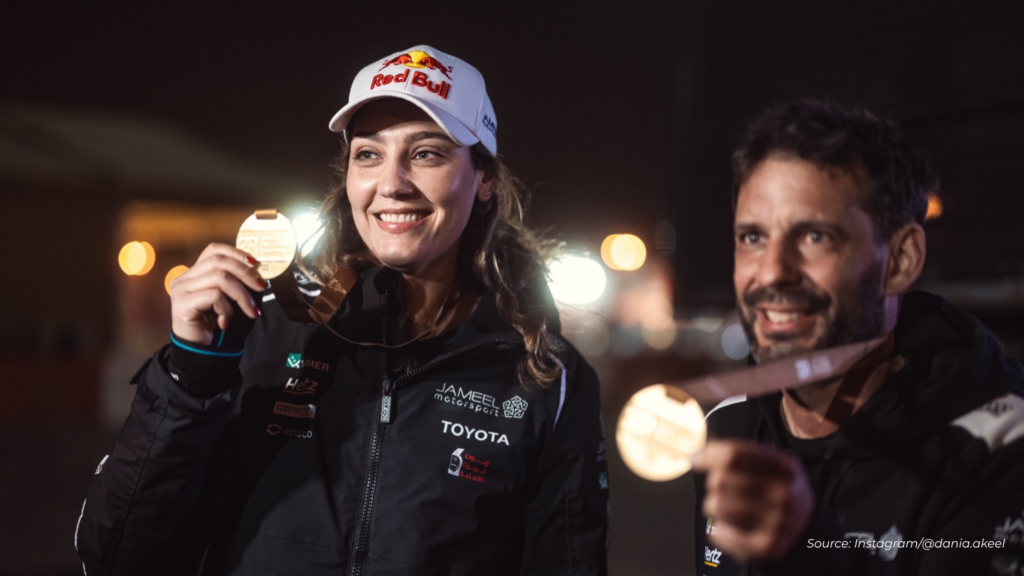
I would say winning Dakar stages in the Challenger class was an outstanding moment. There are some of the best drivers in the world competing on the most challenging terrain in the sport, and it is an incredible feeling to be the fastest, even if it’s just for one day. Winning Dakar stages is a massive achievement. Winning the Middle East Baja Championship twice showed the consistency and proved the level we have, being able to compete against different drivers across two seasons. It was really a great moment. Finishing second behind Yazeed Al-Rajhi, who has won the Saudi Championship multiple times, was also very special. He is a Dakar Rally winner, so he is one of the best in the world. To be close to him in terms of pace and speed, and to target his level, is a privilege. We have seen ourselves getting closer to his speed every year, and that is a very rewarding feeling.
Outside of racing, how do you maintain focus, discipline, and creativity in your professional life?
I think it’s important to maintain close connections with your family and friends. Sport can be very fulfilling, but it doesn’t give you everything in life. I think relationships are very important. They energise you and give you perspective, so it’s important to stay close to your family and friends.For focus and discipline, I love to read, so reading helps maintain focus and creativity.
How do you see the landscape of women’s participation in Saudi motorsports evolving over the next few years?
I think there is a lot of opportunity here in Saudi. Many women are happy to be on the road and in the driver’s seat, behind the steering wheel. I think we have already seen an increase in women’s participation in both local and international events, and I don’t see why that trend wouldn’t continue.
Looking ahead, what are your personal and professional goals for the next 3–5 years, both in motorsport and beyond?
My goals for the next three to five years are, for the moment, focused on my racing career, and we’ll see after that.