
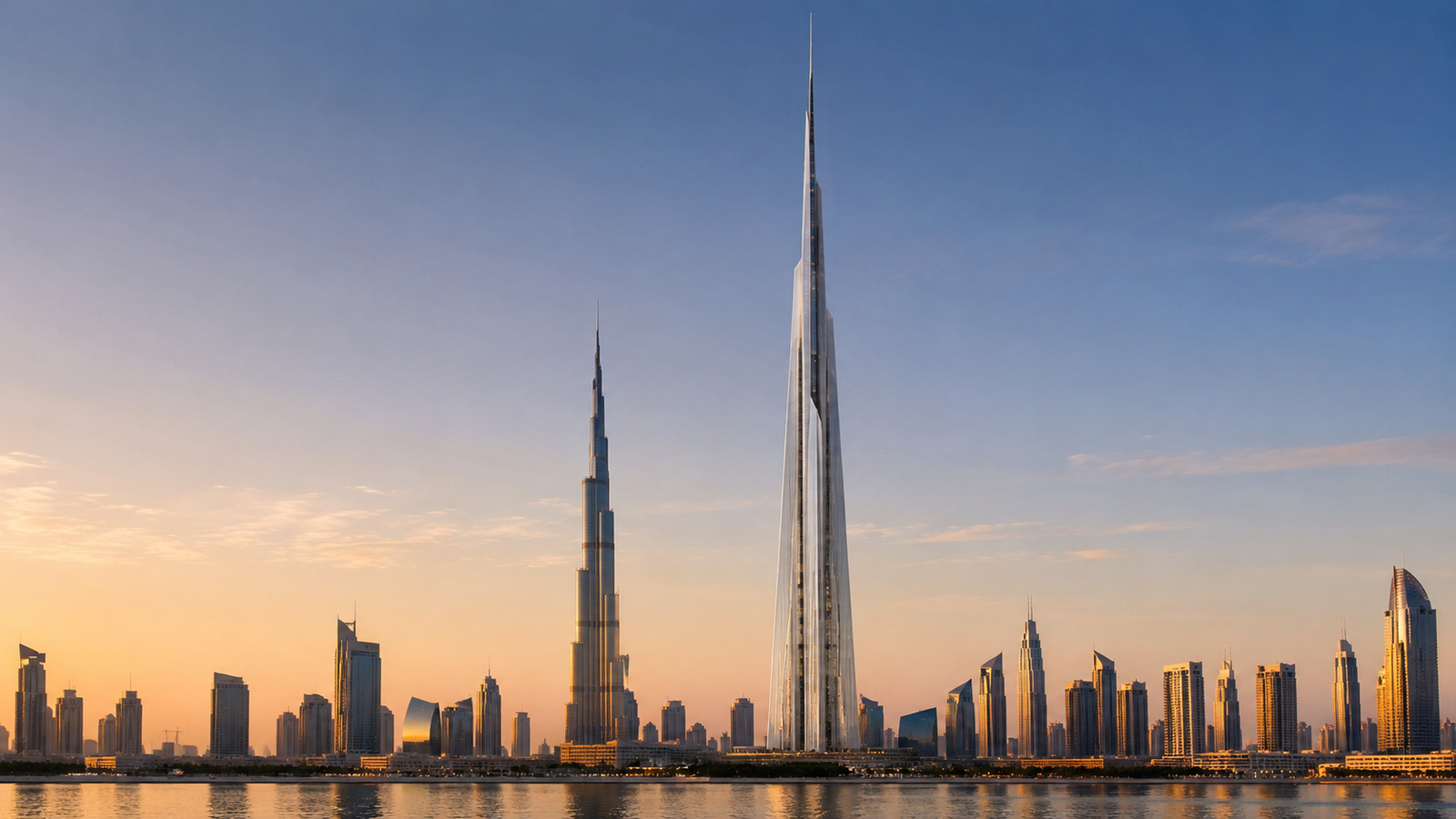
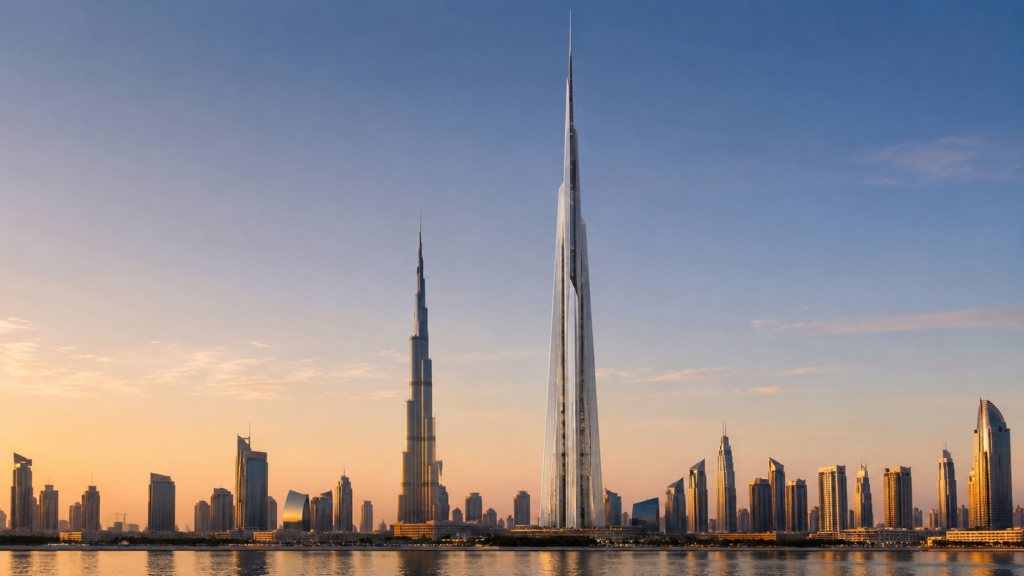
Saudi Arabia’s ambitious plan to build the world’s tallest skyscraper is taking shape again, with Jeddah Tower now rising beyond the 100-floor mark. Designed to exceed one kilometre in height, the megastructure is expected to overtake Dubai’s 828-metre Burj Khalifa and set a new global record for vertical construction.
Located in northern Jeddah, the tower is planned as the centrepiece of the wider Jeddah Economic City development. Once completed, it is expected to have more than 167 storeys and rise at least 1,000 metres into the sky, making it the first building in history to reach the one-kilometre milestone.
Recent construction updates show that the project has made significant progress after years of delays. By June 2026, the structure had passed 100 floors, with some reports placing it above 100 storeys as work continues upward. The tower is expected to be completed in 2028, although major construction projects of this scale can remain subject to changes in schedule.
Jeddah Tower has had a long and complicated journey. Construction began in 2013 but later stalled, leaving the partially completed structure on the city’s skyline for several years. Work eventually resumed, bringing the project back into the global spotlight and renewing Saudi Arabia’s bid to claim the title of the world’s tallest building.
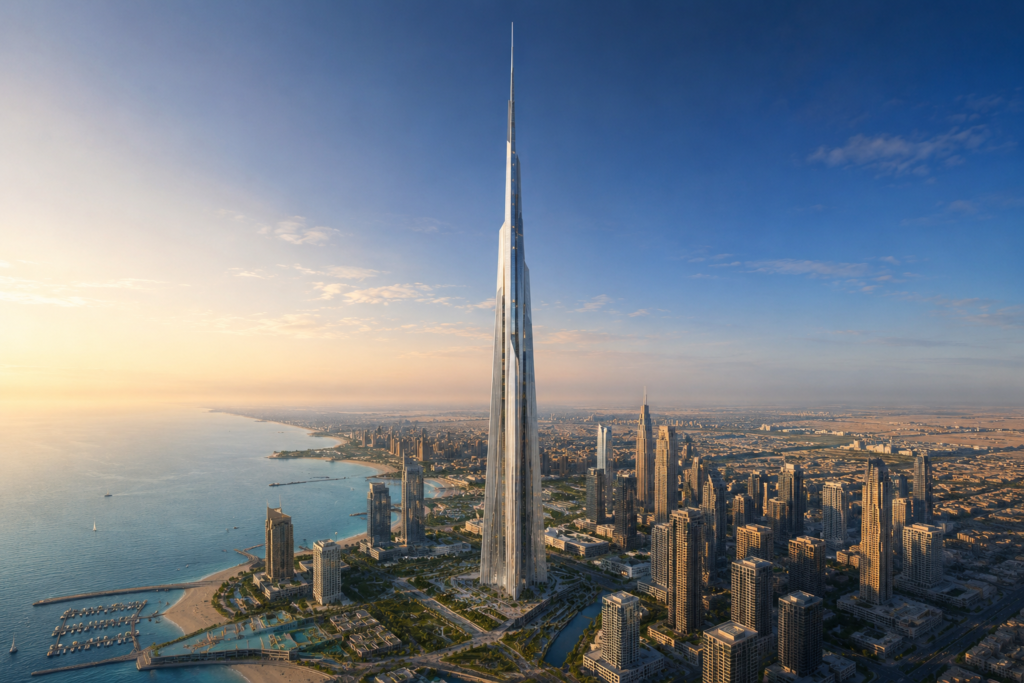
The tower was designed by architect Adrian Smith, who also designed the Burj Khalifa. Its distinctive form gradually narrows as it rises, a design that is intended to reduce the impact of strong winds at extreme heights. Building beyond one kilometre also creates major engineering challenges, from pumping concrete hundreds of metres above the ground to managing wind pressure, vertical transportation and construction logistics.
When completed, Jeddah Tower is expected to become a mixed-use destination with residential spaces, offices, hospitality facilities and observation areas. Its planned sky terrace is set to become one of the most striking features of the project, offering views across Jeddah and the Red Sea from an extraordinary height.
The scale of the tower is best understood through comparison. Burj Khalifa, the current world record holder, stands at 828 metres and has 163 floors. Jeddah Tower is planned to rise more than 170 metres higher, creating a new benchmark for skyscraper engineering.
The project also reflects Saudi Arabia’s wider push to reshape its cities, expand tourism and attract global investment. Across the Kingdom, major developments are changing the country’s architectural landscape, but few projects carry the same international significance as Jeddah Tower.
As construction continues above the 100-floor milestone, the long-delayed megaproject is once again becoming a visible symbol of Saudi Arabia’s architectural ambition. If completed as planned, Jeddah Tower will not simply become taller than Burj Khalifa. It will open a new era in the global race to build higher.