
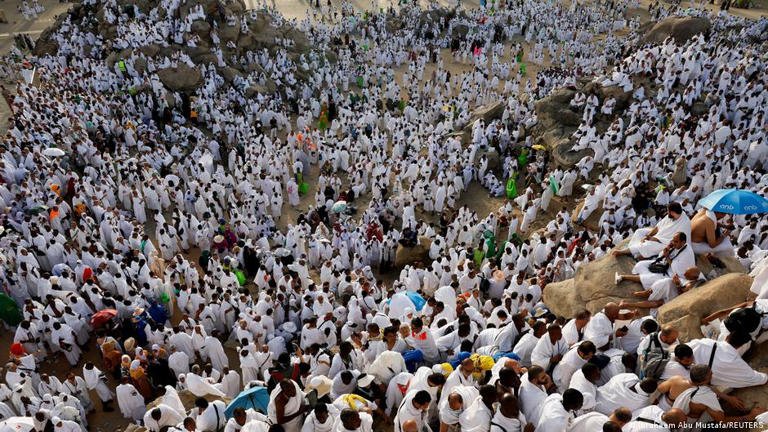
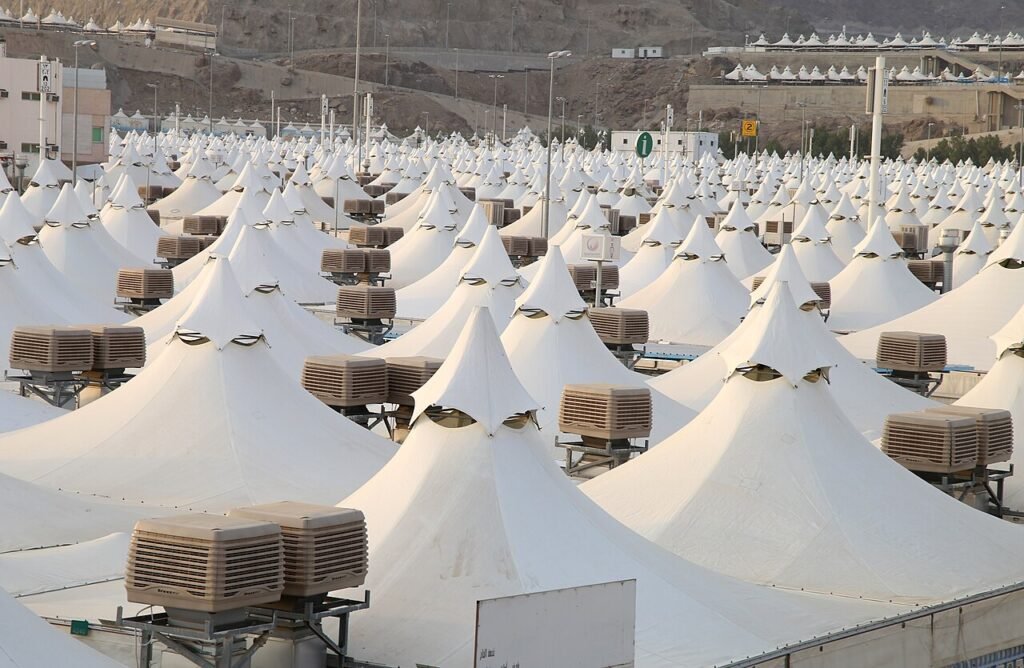
The Indian Hajj Mission in Jeddah, Saudi Arabia, has significantly updated its reception and transport systems this year to dramatically minimize wait times for more than 175,000 Indian pilgrims. Speaking from Mina, Fahad Ahmed Suri, the Consul General of India (CGI) in Jeddah, highlighted that extensive preparation and a 24/7 administrative presence at arrival terminals have successfully managed the massive scale of the operation.
Suri stated that the mission has organized a detailed system for each arriving group. During the current pre-core Hajj phase, they have welcomed 122,518 pilgrims traveling under the Hajj Committee of India across 422 flights—with 51,000 landing in Madinah and the rest arriving via Jeddah. He emphasized that every phase of movement was meticulously coordinated alongside airport authorities, airlines, baggage handlers, and ground staff.
Among the key logistical advancements introduced by CGI Jeddah to improve comfort, Suri noted the first-ever integration of Saudi Arabia’s high-speed rail system into the transit plan. Half of the pilgrims traveling between Madinah and Makkah are utilizing the high-speed train, which has notably enhanced travel convenience.
To prevent typical airport delays, the mission also implemented a “baggage-free travel” initiative. Arriving pilgrims can head straight to their lodging without waiting at airport baggage carousels. Their luggage—amounting to roughly 250,000 pieces so far—is carefully tracked and delivered directly to their accommodations in Makkah or Madinah by ground teams.
The Consul General attributed these achievements to real-time, close cooperation between the Indian Hajj Mission and Saudi government bodies, especially the Ministry of Hajj and Umrah. Furthermore, proactive coordination prevented India from losing any of its 175,025 allocated slots (which include 122,518 seats through the Hajj Committee and 52,507 via private operators). When last-minute cancellations occurred due to unexpected circumstances, the Indian mission worked closely with Saudi authorities to instantly replace those individuals using the Hajj Committee of India’s waiting list.
Suri advised pilgrims to leave all logistical anxieties behind and focus purely on their spiritual journey, assuring them that the mission is fully equipped to handle their needs. He concluded by framing this successful Hajj coordination within the broader scope of India-Saudi strategic relations, noting that the deep logistical collaboration mirrors the strong bilateral and people-to-people ties between the two nations.