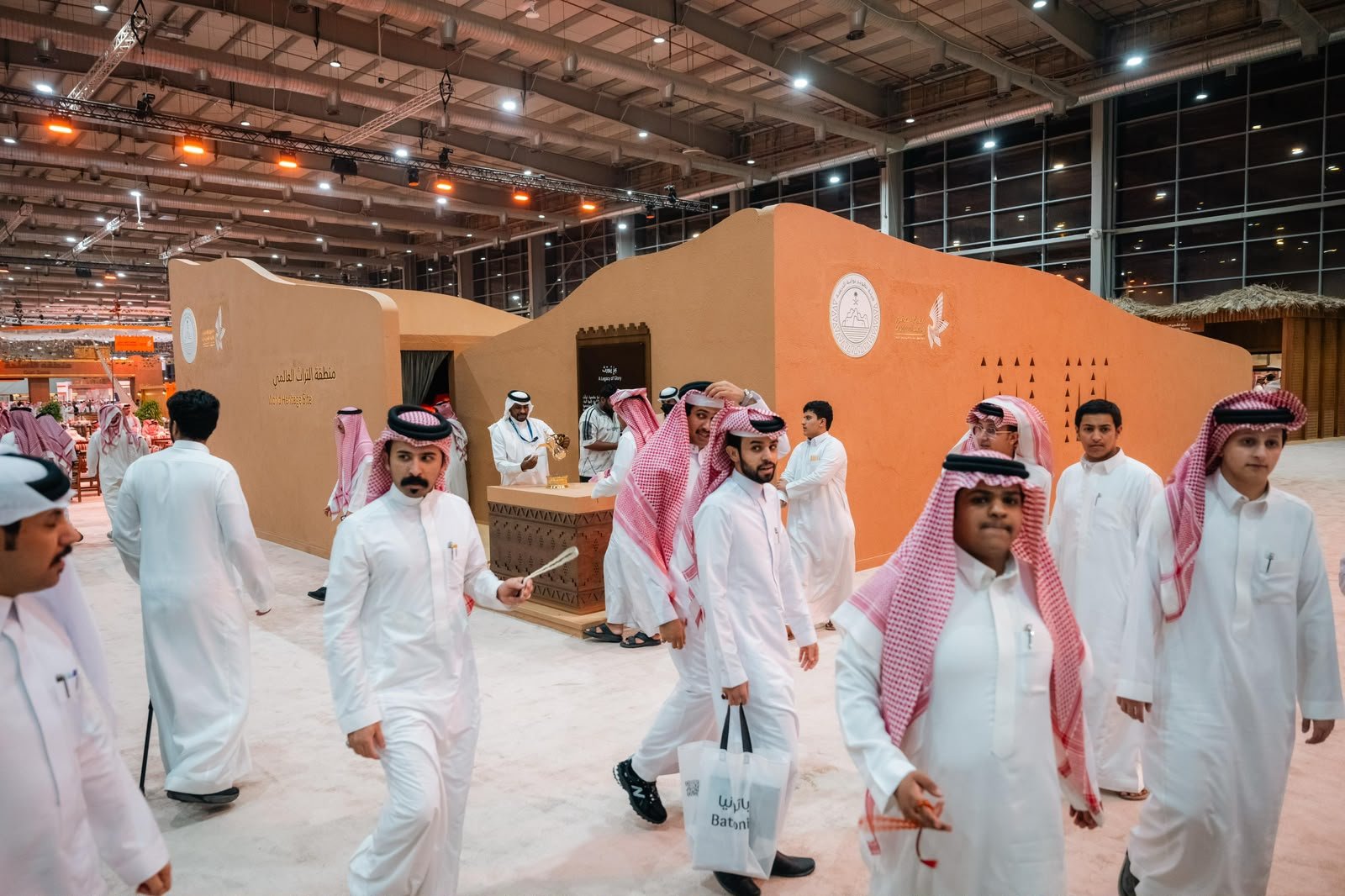

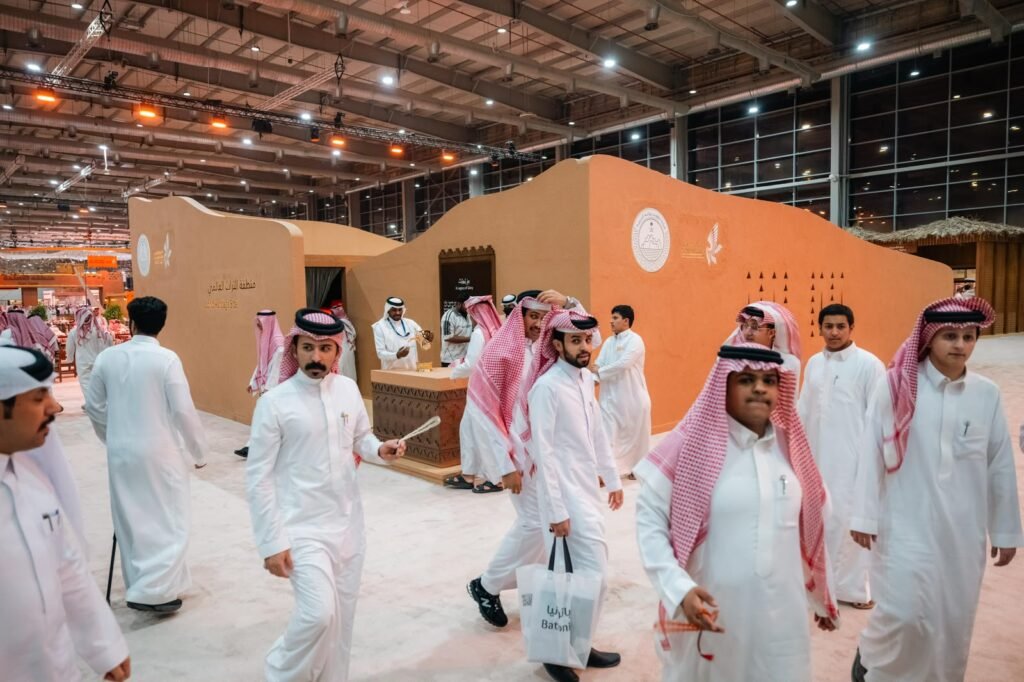
The Diriyah Gate Development Authority is showcasing the history of Diriyah and At-Turaif through its pavilion at the Saudi International Falcons and Hunting Exhibition 2026, drawing visitors with an immersive experience titled “A Legacy of Pride.”
The pavilion combines visual displays, historical models and Arabic calligraphy to introduce visitors to the political, cultural and intellectual significance of At-Turaif, as well as its architectural heritage.
Exploring At-Turaif’s History
The experience highlights At-Turaif’s role during the 18th and 19th centuries, when Diriyah developed as a major political and cultural centre and At-Turaif became a seat of government during the growth of the Saudi state.
In 1766, Imam Abdulaziz bin Muhammad bin Saud selected At-Turaif as a residence and seat of government for the ruling family, benefiting from its strategic and fortified location.
The historic district covers around 235,000 square metres and includes 13 palaces and five mosques, including At-Turaif Mosque. It also features public facilities such as Bayt Al Mal and Sabalat Moudi.
A UNESCO World Heritage Site
At-Turaif has been listed as a UNESCO World Heritage Site since 2010, making it the second Saudi site to be added to the list.
The pavilion highlights the district’s Najdi architecture, built primarily from mud brick and adapted to the local environment. Visitors are introduced to the area’s architectural features and its importance within Saudi Arabia’s history.
The experience also explores Diriyah’s role as a centre of learning, highlighting its importance as a destination for scholars and students of knowledge and the attention given to intellectual and educational activities by the leaders of the Saudi state.
A Visual Journey Through Diriyah
Visitors can explore an exhibition hall featuring an archive of At-Turaif’s history and its different stages of development through creative visual displays.
The pavilion also introduces visitors to prominent landmarks across Diriyah, including Wadi Hanifah, Salwa Palace and several historic palaces.
At the centre of the pavilion is a detailed model of At-Turaif, allowing visitors to explore its urban layout and key landmarks while learning more about the history of the leaders of the First Saudi State and the values associated with them.
The experience concludes with an Arabic calligraphy activity, giving visitors the opportunity to engage directly with one of the art forms closely connected to Arab culture.
Bringing Saudi Heritage to a Wider Audience
The presence of At-Turaif at the exhibition forms part of the annual initiative to highlight one of Saudi Arabia’s UNESCO World Heritage Sites.
By bringing the historic district into an exhibition centred on falconry and hunting, the initiative connects the Kingdom’s falconry heritage with its broader cultural and historical identity, while giving visitors an opportunity to discover Saudi sites recognised on the global heritage list.