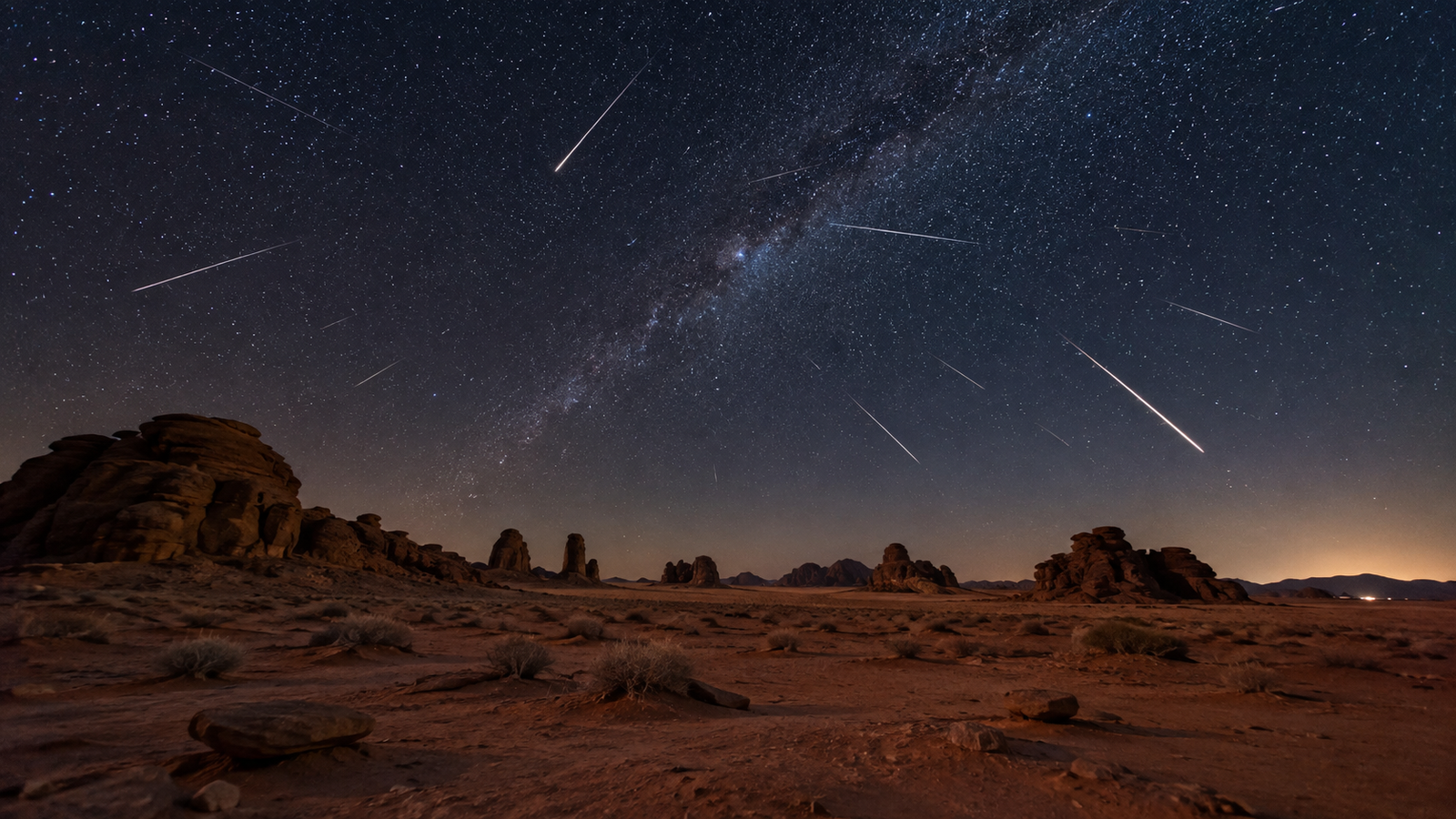

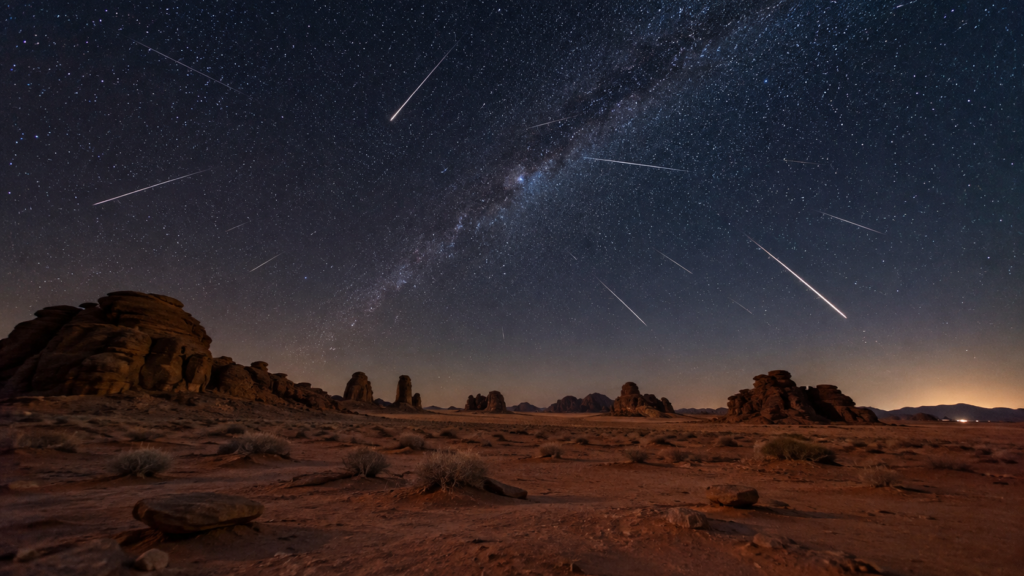
Skywatchers across Saudi Arabia are in for a spectacular celestial display as the annual Perseid meteor shower reaches its peak during the night of August 12 and the early hours of August 13. Considered one of the brightest and most reliable meteor showers of the year, the event is expected to offer ideal viewing conditions thanks to dark, moonless skies. Astronomers say people in many parts of the Kingdom could witness dozens of shooting stars every hour if weather conditions remain clear.
The Perseid meteor shower occurs every year when Earth passes through a stream of tiny particles left behind by Comet Swift-Tuttle. As these dust-sized fragments enter Earth’s atmosphere at extremely high speeds, they heat up due to friction with the air and burn brightly, creating the glowing streaks of light commonly known as shooting stars. Despite their brilliant appearance, most of these particles are no larger than a grain of sand and completely disintegrate before reaching the ground.
The meteor shower is active from mid July until late August each year, but the highest activity is expected during its peak on August 12 and 13. This year is especially favorable because the peak coincides with a new moon, resulting in darker skies and improved visibility. Under ideal conditions away from city lights, observers could see between 50 and 100 meteors per hour, including the occasional bright fireball that leaves a glowing trail across the sky.
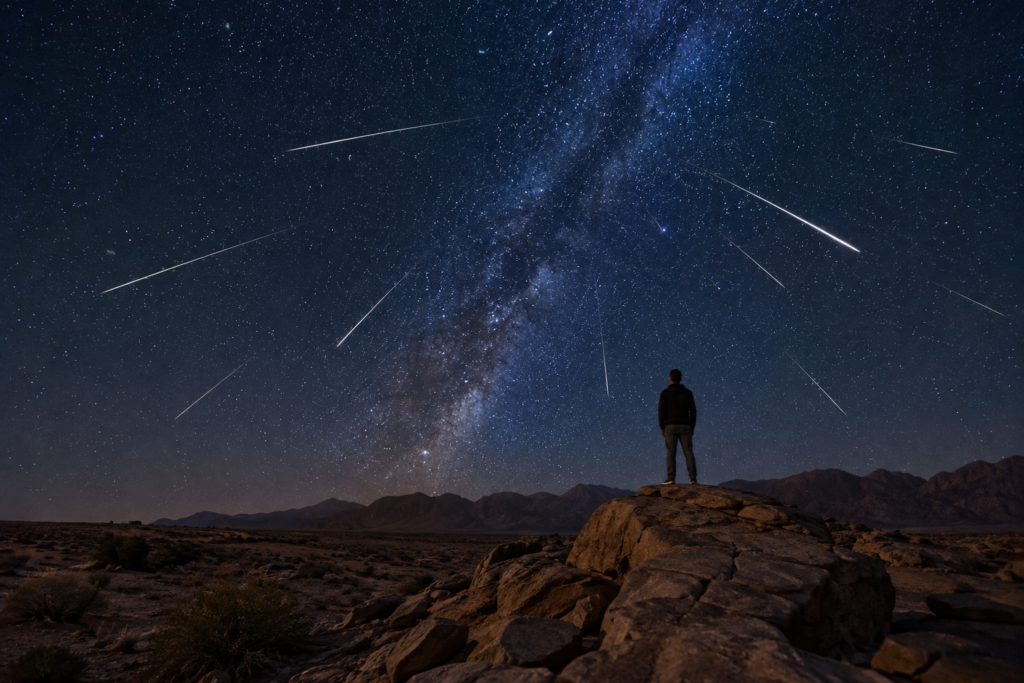
Saudi Arabia offers excellent opportunities for observing the event due to its vast desert landscapes and generally clear summer skies. Stargazers are encouraged to head to remote locations away from urban lighting, where the night sky is at its darkest. Popular destinations such as AlUla, the Empty Quarter, and other open desert areas provide ideal conditions for enjoying the meteor shower.
Astronomers recommend beginning observations after midnight and continuing until dawn, when the constellation Perseus rises higher in the northeastern sky. Although the meteors appear to radiate from Perseus, they can streak across any part of the sky, making it unnecessary to focus on a single point. No telescope or binoculars are required, as the shower is best viewed with the naked eye. Experts also advise allowing about 20 to 30 minutes for your eyes to adjust to the darkness while avoiding bright phone screens that can reduce night vision.
The Perseid meteor shower has captivated people for centuries and remains one of the highlights of the astronomical calendar. For residents and visitors across Saudi Arabia, tonight offers a rare chance to witness one of nature’s most breathtaking nighttime spectacles under some of the year’s best viewing conditions.