

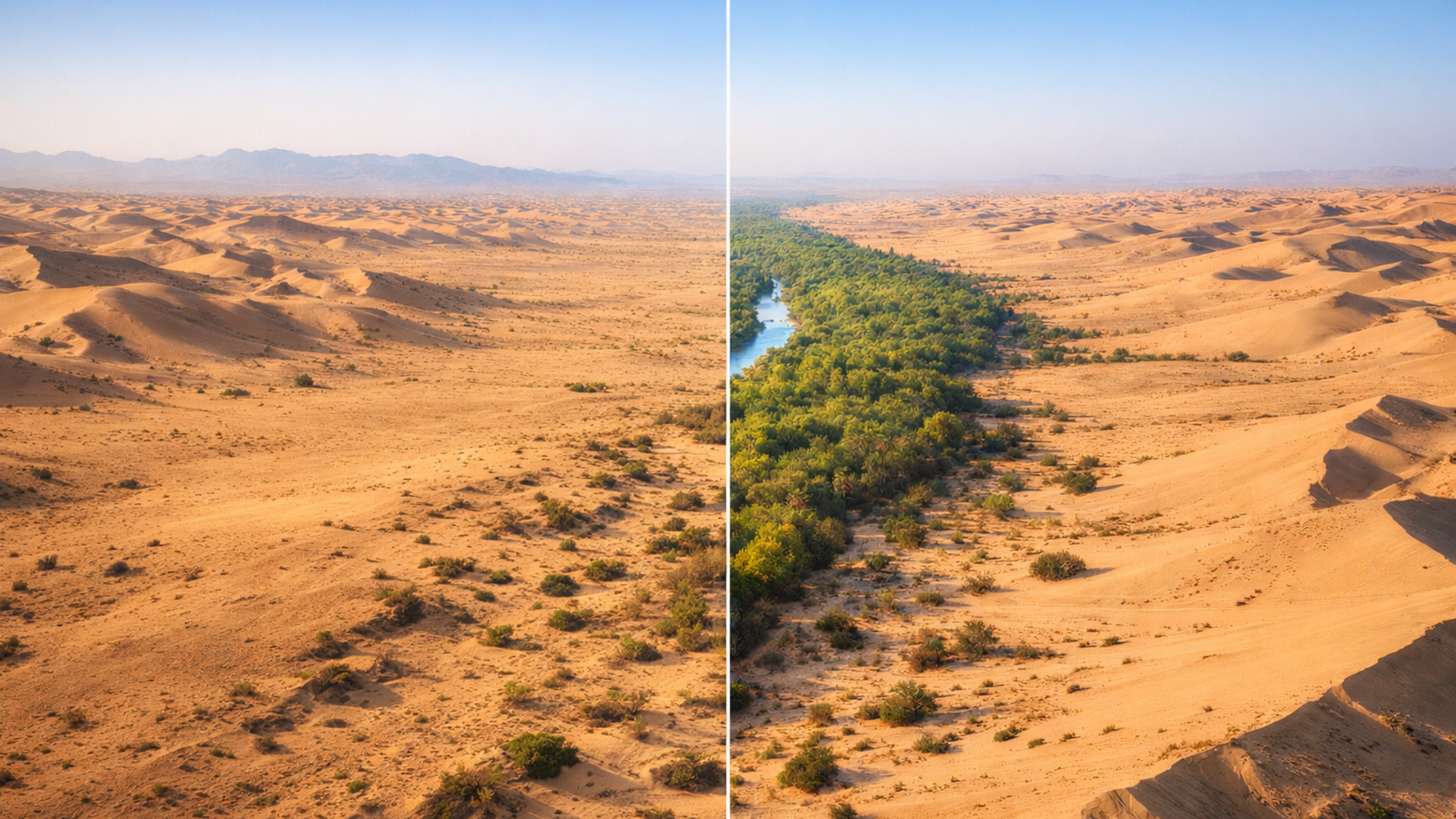
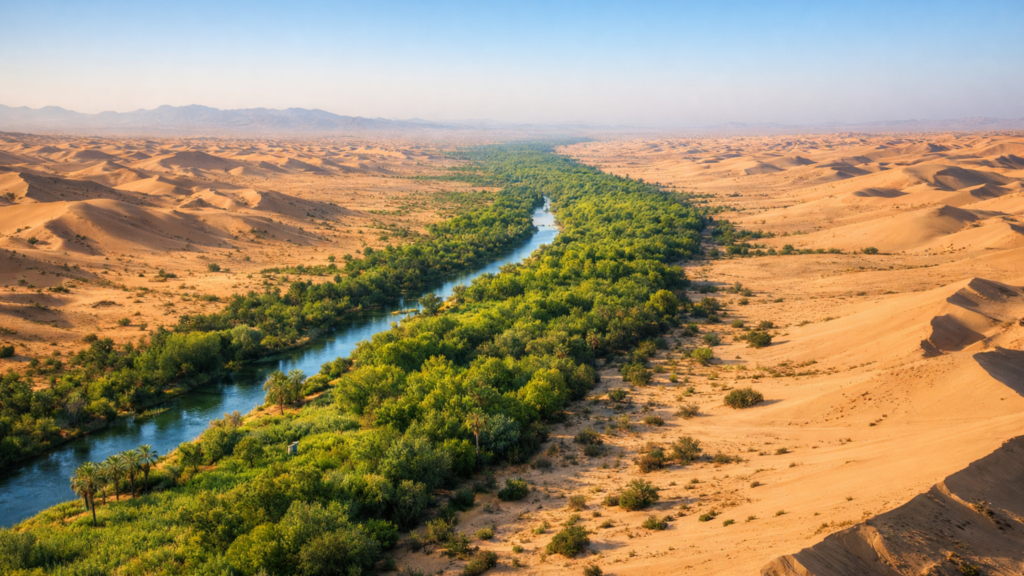
Saudi Arabia is transforming parts of its desert landscape through a new sustainability effort that uses treated wastewater to create green corridors across arid regions.
The project focuses on reusing wastewater instead of discarding it, turning it into a valuable resource for irrigation and environmental restoration. In Riyadh, this approach has helped create a continuous green corridor through Wadi Hanifah, a valley that now supports flowing water and growing vegetation in the middle of the desert.
By channeling treated water into open landscapes, Saudi Arabia is not only conserving water but also addressing major environmental challenges such as desertification and air quality. The green corridors help stabilize soil, reduce sand movement, and create cooler microclimates in urban and surrounding areas.
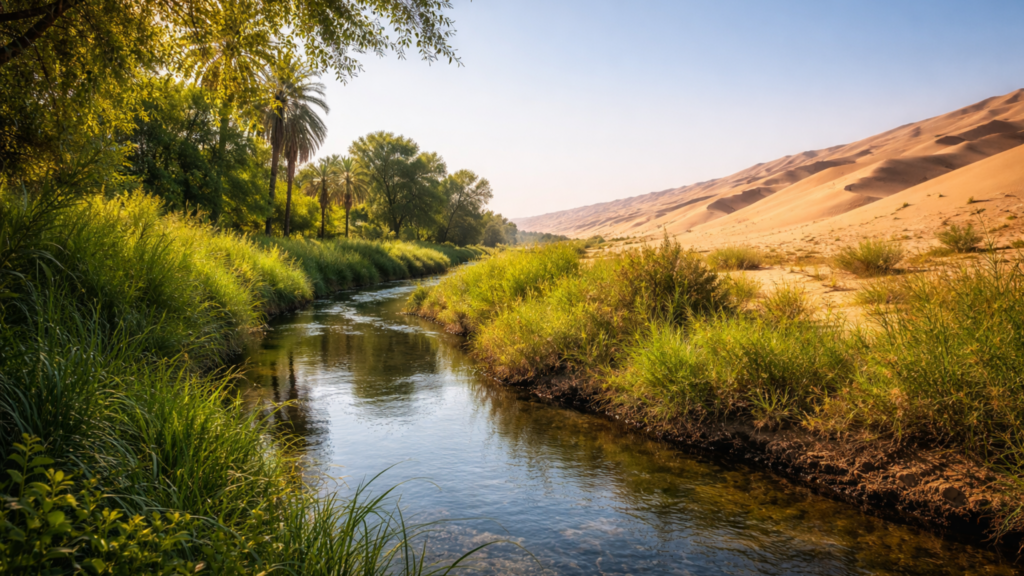
The project also supports biodiversity. Areas that were once dry are now seeing the return of plant life, birds, and other wildlife, showing how quickly ecosystems can recover when water becomes available. In some areas, thousands of trees and plants have been introduced, turning dry land into livable green spaces.
Saudi Arabia is scaling up wastewater reuse as part of its long-term sustainability goals, with hundreds of millions of cubic meters of treated water now being reused each year. This reduces reliance on energy-intensive desalination and supports more efficient water management in one of the world’s driest regions.
The initiative aligns with the Kingdom’s broader environmental strategies, including efforts to expand green spaces, improve urban living conditions, and combat climate change under Vision 2030.
By turning wastewater into a resource, Saudi Arabia is reshaping how desert environments can be managed, offering a model for sustainable development in water-scarce regions around the world.